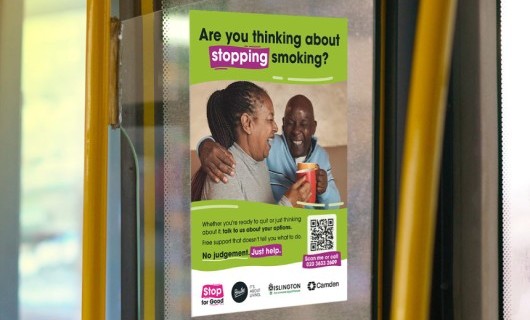
Community-Driven Insights and Campaigns for Smoking Cessation
Community-led research shaped personalised campaigns and service improvements, helping Islington and Camden tackle smoking inequalities among priority groups.
More +

Exploring Motivations and Barriers to Smoking Cessation

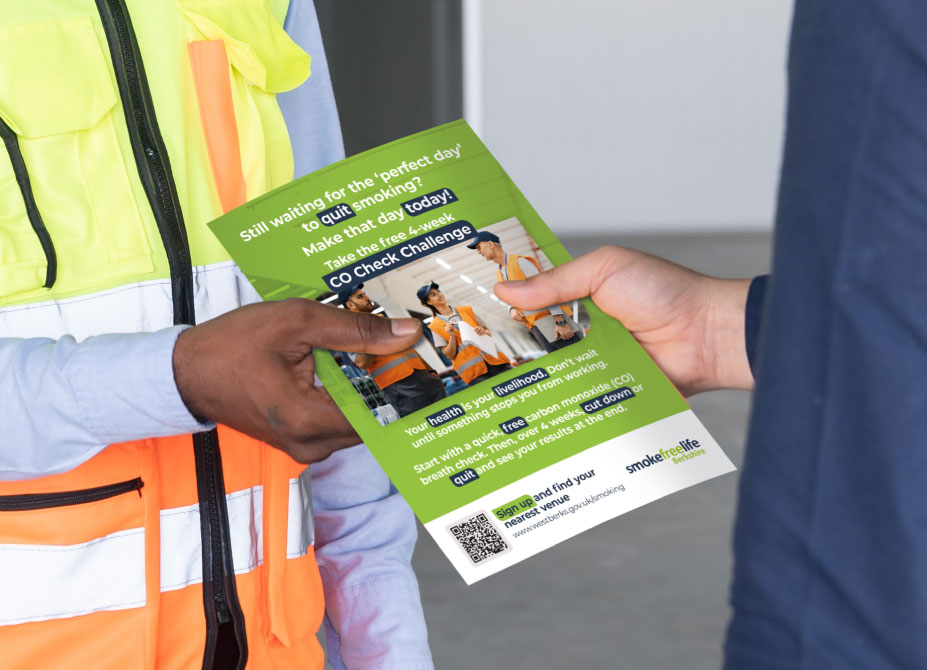
Targeted Smoking Inequalities in West Berkshire
Routine and manual workers in West Berkshire are more likely to smoke and face greater barriers to quitting, but their needs are often overlooked in traditional health campaigns. Our mission was to change that. We partnered with West Berkshire Council to uncover what really drives smoking behaviours in this group, using behavioural science to explore motivations, barriers, and lived experiences. Our goal was to shape a targeted, relatable campaign that helps more people believe they can quit, understand where to find support, and take practical steps toward becoming smoke-free.
Understanding Lived Experiences Through Behavioural Science
We used a behavioural science-led approach combining secondary research, stakeholder input, in-person focus groups, and virtual interviews with routine and manual workers across West Berkshire. This helped us explore not only what people think and do around smoking, but why. Frameworks such as COM-B, the Behaviour Change Wheel, MINDSPACE and EAST guided our questioning, analysis and recommendations. By listening to participants' real-life routines, stressors, motivations, and barriers, we uncovered the deep emotional, social, and structural dynamics that shape smoking behaviour. These insights ensured our recommendations were grounded, targeted, and designed for real-world change.
Insights into Real-Life Barriers and Motivators
We uncovered a complex mix of emotional, social, and practical barriers to quitting smoking among routine and manual workers. Many participants viewed smoking as a coping tool or social connector, rather than an addiction, making health risks feel distant or irrelevant. Awareness of local services was low, and existing support felt generic or difficult to access. However, there was strong appetite for relatable, flexible support and messaging that felt non-judgemental. Real-life stories, peer connection, and practical advice were seen as far more powerful than traditional warnings, highlighting clear opportunities for more resonant, behaviourally informed campaigns.
Turning Insight into a Behaviourally Informed Campaign
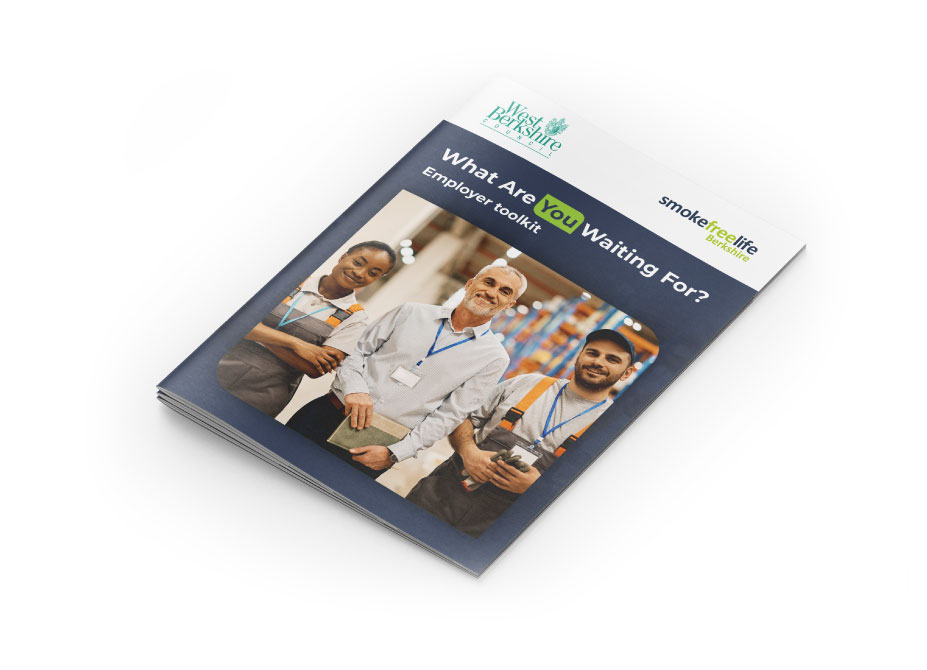
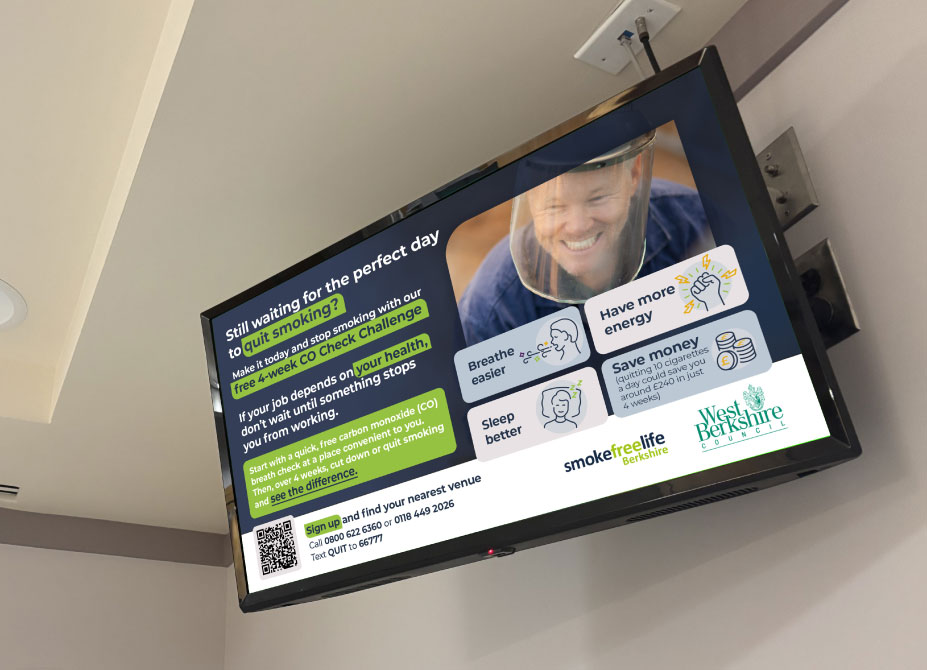
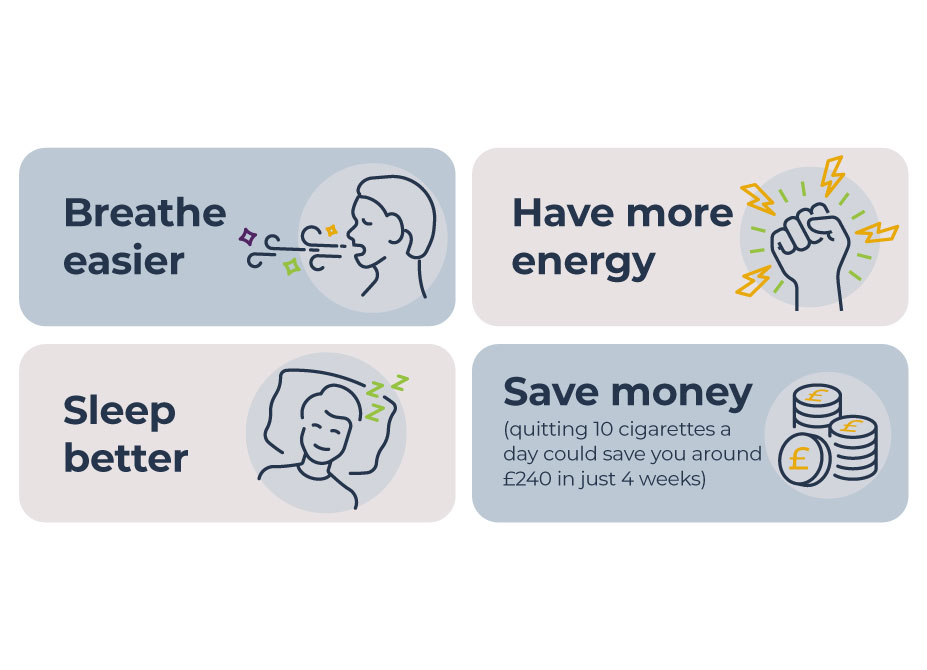
Our insights informed a set of behaviourally grounded recommendations for West Berkshire’s smoking cessation efforts. Led by the research, we created the What Are You Waiting For? creative campaign, built to interrupt quitting delay and make it feel relevant and achievable, with tangible immediate benefits. Rather than relying on fear-based messaging, we developed a positive, choice-led approach centred on a four-week CO Check Challenge, giving people a tangible first step without pressure. This was supported through a consistent suite of social assets, posters, flyers, employer toolkits and website content, using relatable imagery, practical benefits and clear signposting to support action across workplaces, community settings and trusted council channels.
Helping Routine and Manual Workers Take the First Step
The campaign created a clear route from awareness to action. During delivery, 27 users visited the stop smoking page, 18 clicked through to the referral form, and 31 people took a baseline CO reading. Of these, 28 achieved a four-week CO-verified quit rate, representing a 90% conversion rate compared to the standard KPI benchmark of 60%. Furthermore, employer outreach conducted alongside campaign delivery help lay the groundwork for future activity to better engage routine and manual workers with sessions support. These results demonstrate the strength and value of a low-pressure, behaviourally informed approach that makes support feel accessible, relevant and achievable.
"The whole team has been fantastic to work with from start to finish. From travelling down to West Berkshire to carry out the insights work, to meeting with us to refine and adjust the campaign assets, the level of collaboration and support has been excellent."
West Berkshire Council Colleague
"The insights work completed prior to the creation of the campaign in addition to the assets produced exceeded our expectations as we have been able to use the insights to shape our Local Stop Smoking provision moving forward and can continue to use the assets which provides us with lots of opportunities to reach residents."
West Berkshire Council Colleague


Community-led research shaped personalised campaigns and service improvements, helping Islington and Camden tackle smoking inequalities among priority groups.
More +
Exploring smoking behaviours in routine and manual workers across two London Boroughs, and how to engage them with cessation support.
More +
A behaviour change campaign to inspire as many people as possible to give up smoking for good
More +We were commissioned by Public Health Wales to develop a behaviour change campaign to decrease the number of young people taking up smoking.
More +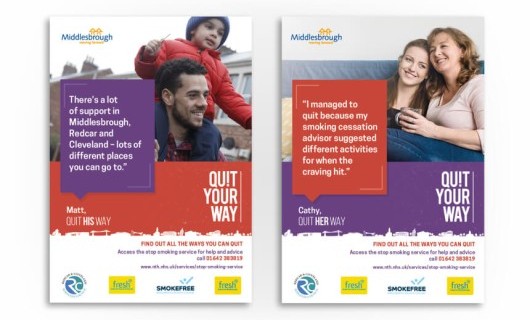
We worked with Middlesbrough Council to uncover local insight into smoking behaviours and develop a stop smoking campaign.
More +By entering your email address, you agree to be added to our mailing list.
We respect your privacy.
We never sell data.
Unsubscribe anytime.