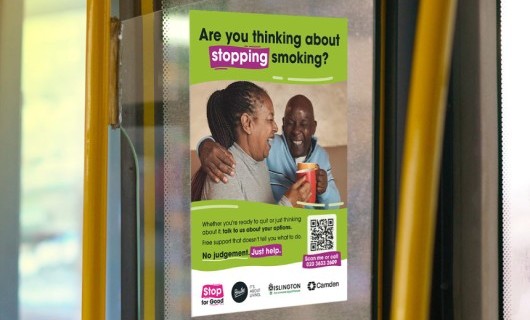
Community-Driven Insights and Campaigns for Smoking Cessation
Community-led research shaped personalised campaigns and service improvements, helping Islington and Camden tackle smoking inequalities among priority groups.
More +

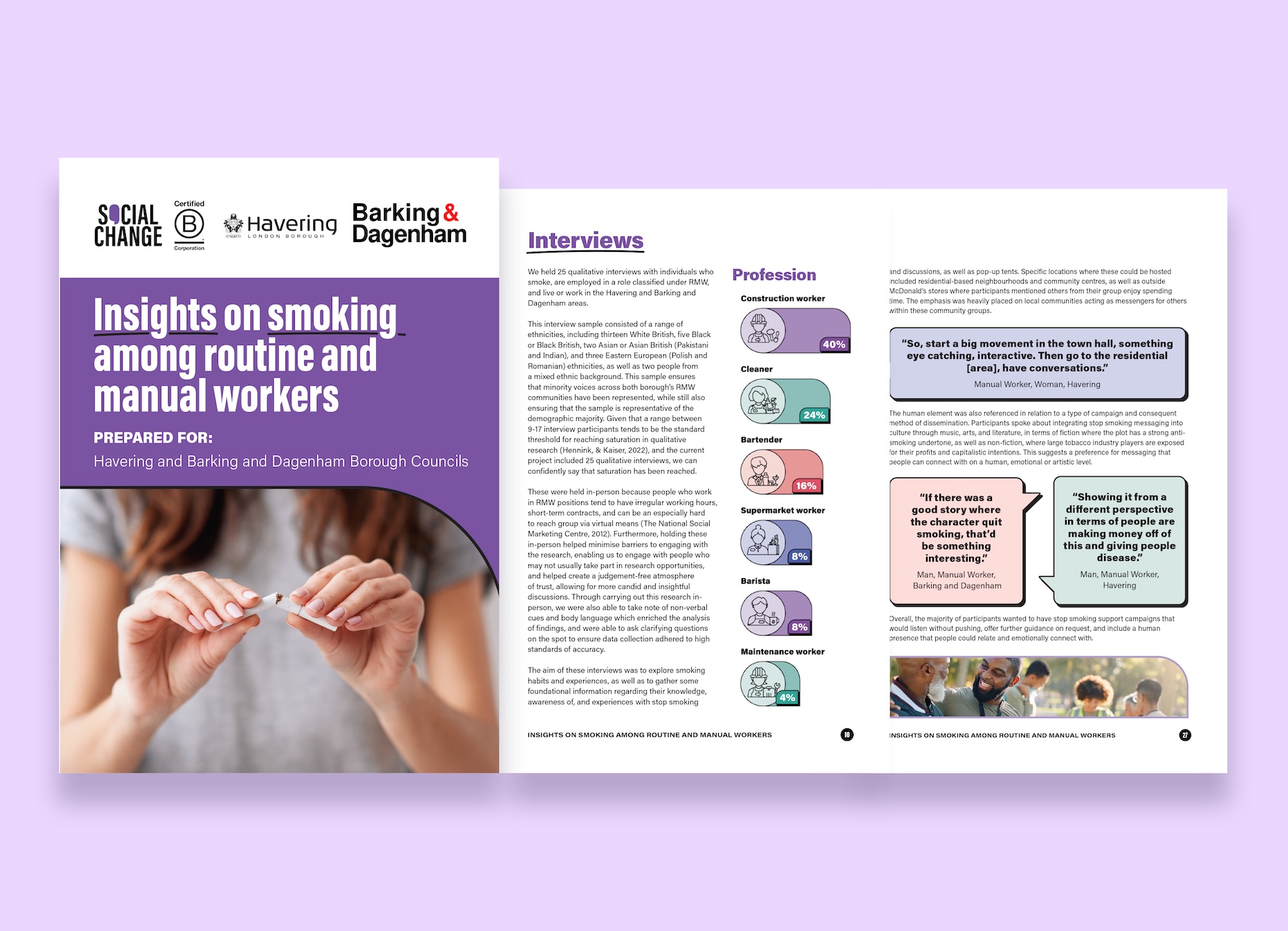
We worked with the London Boroughs of Havering and Barking & Dagenham to explore smoking behaviours in routine and manual workers, and how best to engage them with cessation messages and services.

Reaching Smokefree 2030
With a national Smokefree 2030 target looming, the London Boroughs of Havering and Barking & Dagenham wanted to understand smoking behaviours of routine and manual workers. This population are shown to have higher than average smoking rates, and so are a key demographic to target with smoking cessation messages and support services. Social Change was therefore commissioned to undertake insight research to understand their current smoking behaviours, barriers and motivators to cessation, and perceptions towards current services and messaging.
Building a qualitative case
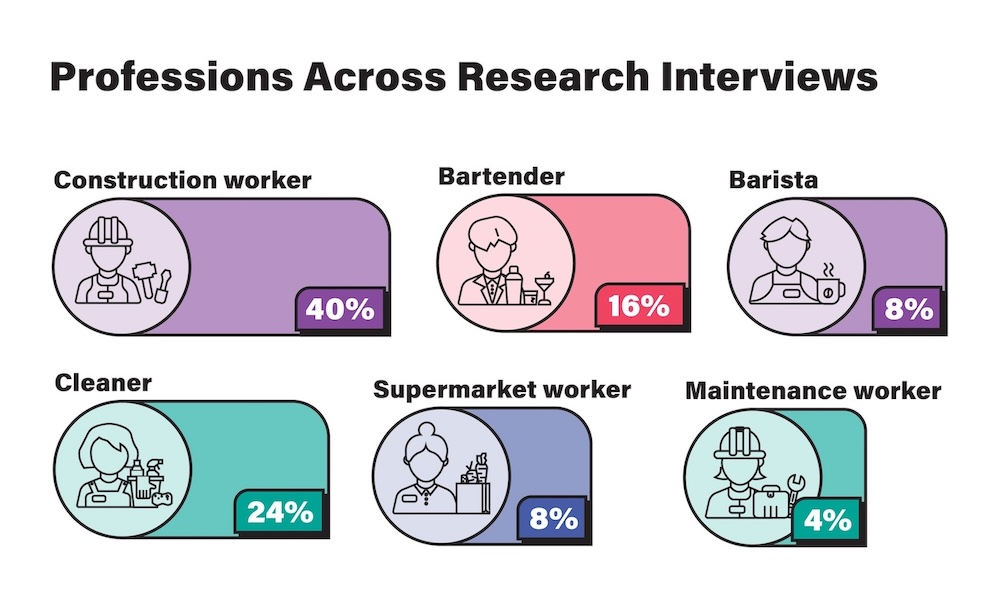
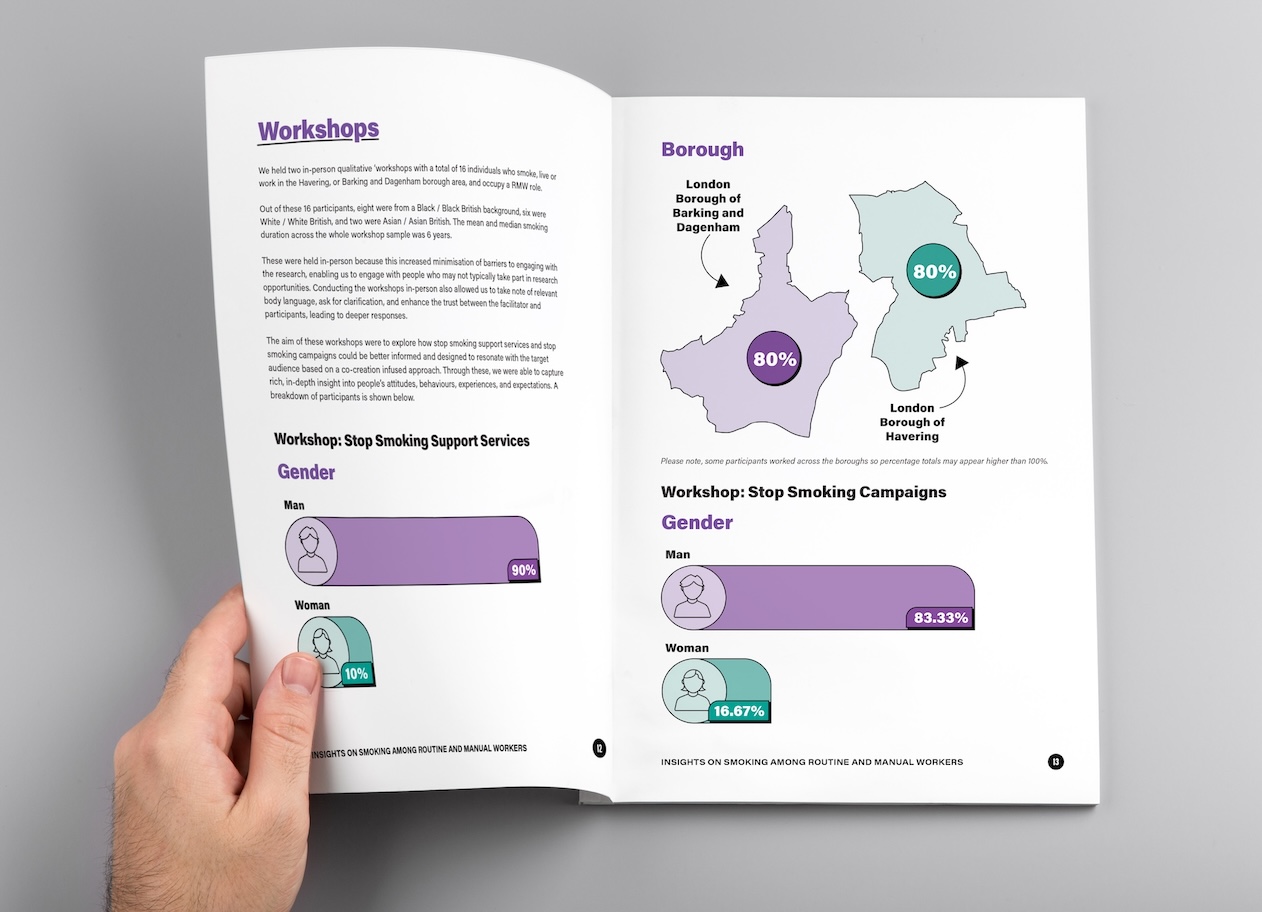
We implemented a mixture of desk-research and qualitative engagement with people from various routine and manual occupations. Through 25 interviews and two focus groups, we engaged with people working in construction, hospitality, retail, cleaning and maintenance to explore their smoking stories – how long have they been smoking, what encourages them to do so, and whether quitting is something they would consider. We also co-designed future smoking cessation messages and services, identifying what support they feel would be beneficial to them and how best to engage them with stop smoking messages, encouraging behaviour change.
People want control and routine
The research found that people want to feel in control of their own decisions, and messages that tell them to “stop” smoking can undermine this. However, even when they make the decision to quit, habit, low confidence, and social pressures all make change difficult. For many, smoking is deeply embedded in daily life and hard to separate from. The findings together highlight the importance of emphasising choice and that quitting is their decision, while making it clear that support is available whenever they feel ready.
This research informed a number of recommendations as to how future service provision and communications could better reach, engage, and support routine and manual workers to stop smoking. This includes relatable campaigns which don’t pressure people to stop smoking, but rather reassures them that there is support available when they’re ready. This is in addition to disentangling people from a ‘smoker’ identity, provide alternative ways to cope with stress and boredom, make it easier to engage with services, and provide a more holistic support offer, addressing the root cause of smoking behaviours.
As a result of these insights, we developed a range of behaviourally informed assets, including social media content, flyers, and billboards, designed to resonate with this audience and drive engagement across the Havering Borough.
Community-led research shaped personalised campaigns and service improvements, helping Islington and Camden tackle smoking inequalities among priority groups.
More +
A community insight and communications project that used behavioural understanding to engage local communities and encourage healthier behaviours linked to the Vital 5 health factors.
More +
A behaviour change insight project that explored waste and recycling behaviours across West London, helping shape more effective strategies to reduce waste and increase participation in recycling.
More +By entering your email address, you agree to be added to our mailing list.
We respect your privacy.
We never sell data.
Unsubscribe anytime.