Quit for Them
We were commissioned by Public Health Wales to develop a behaviour change campaign to decrease the number of young people taking up smoking.
More +

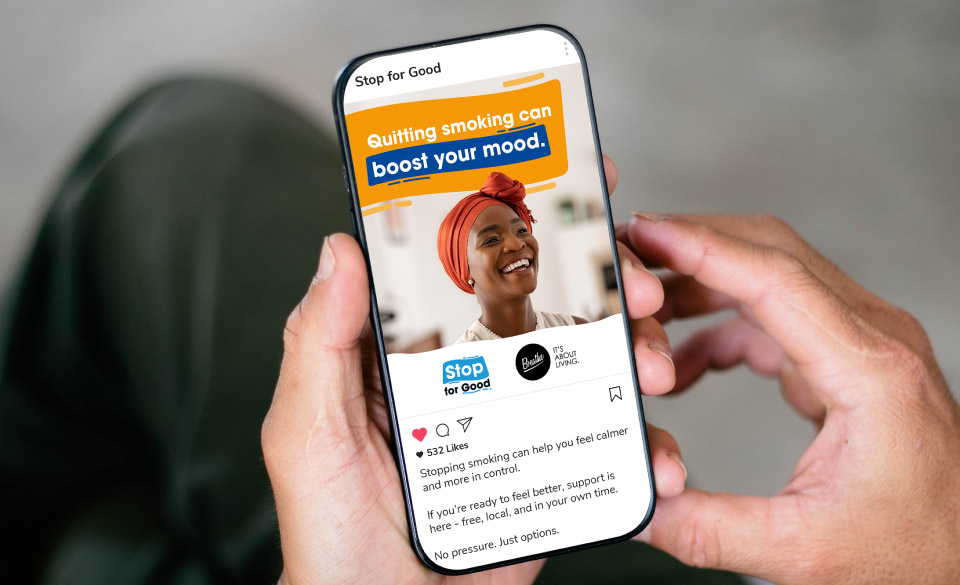
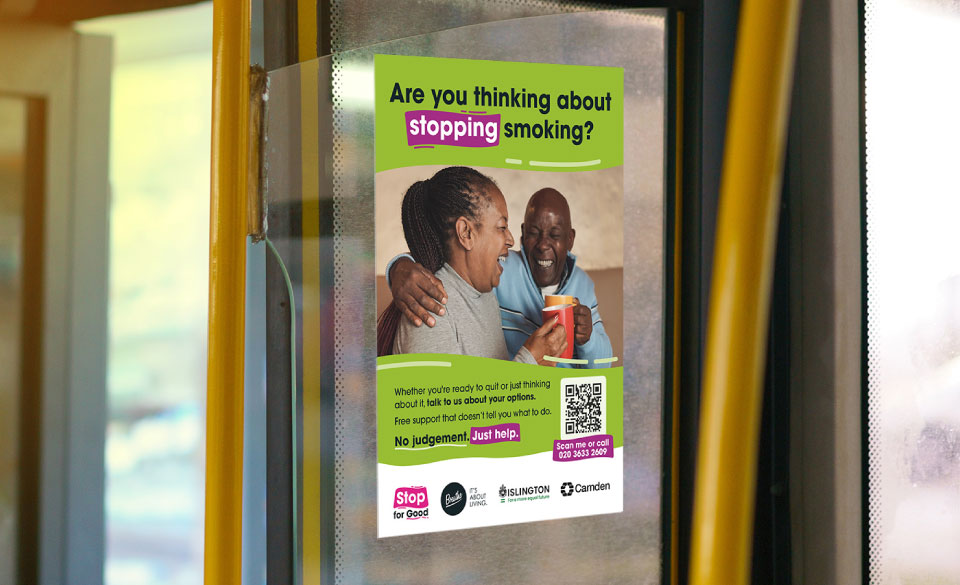
We partnered with Islington and Camden Public Health teams to understand barriers and motivators for smoking cessation among priority groups, aiming to shape more effective, community led campaigns and improve access to support services.
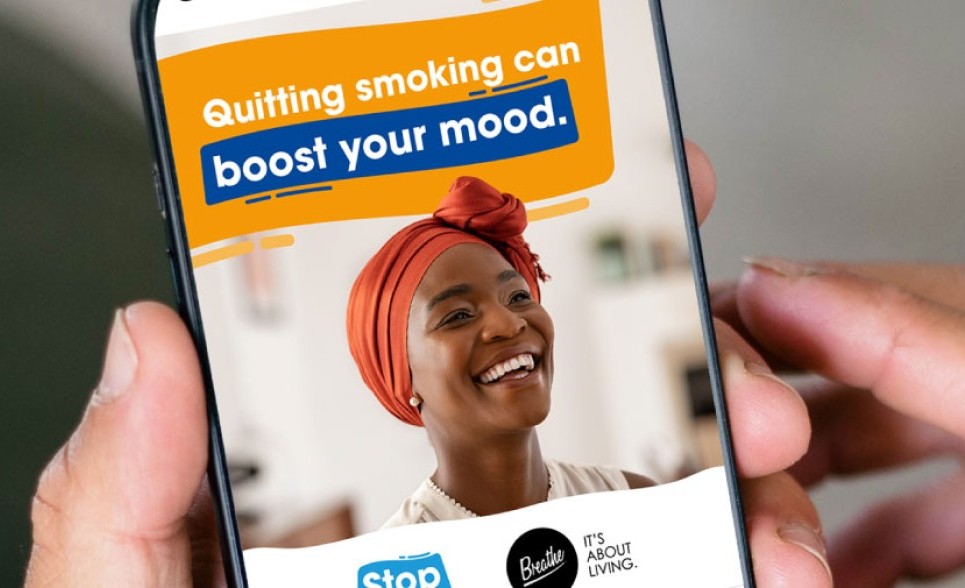
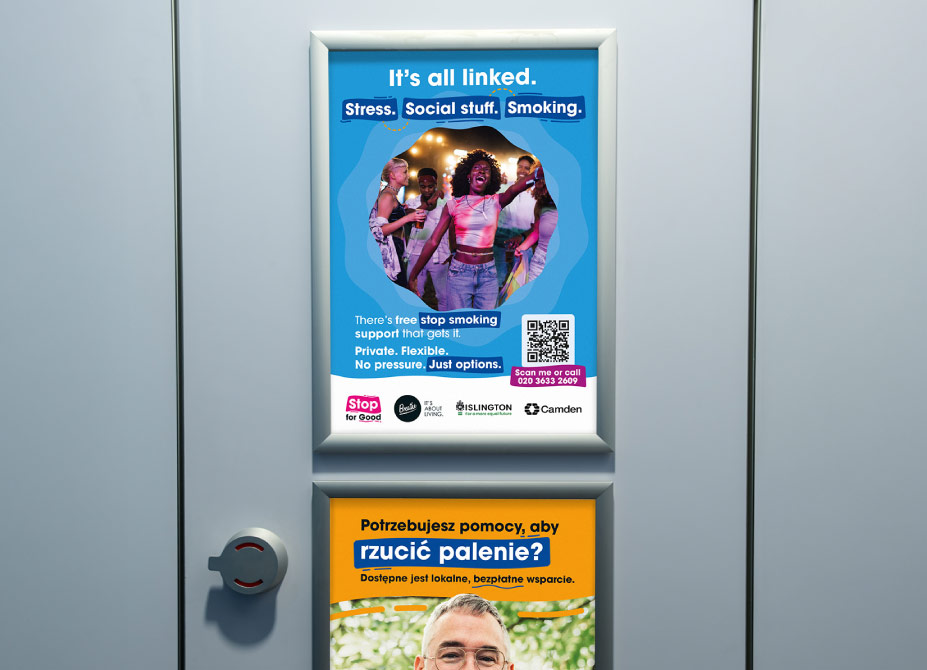
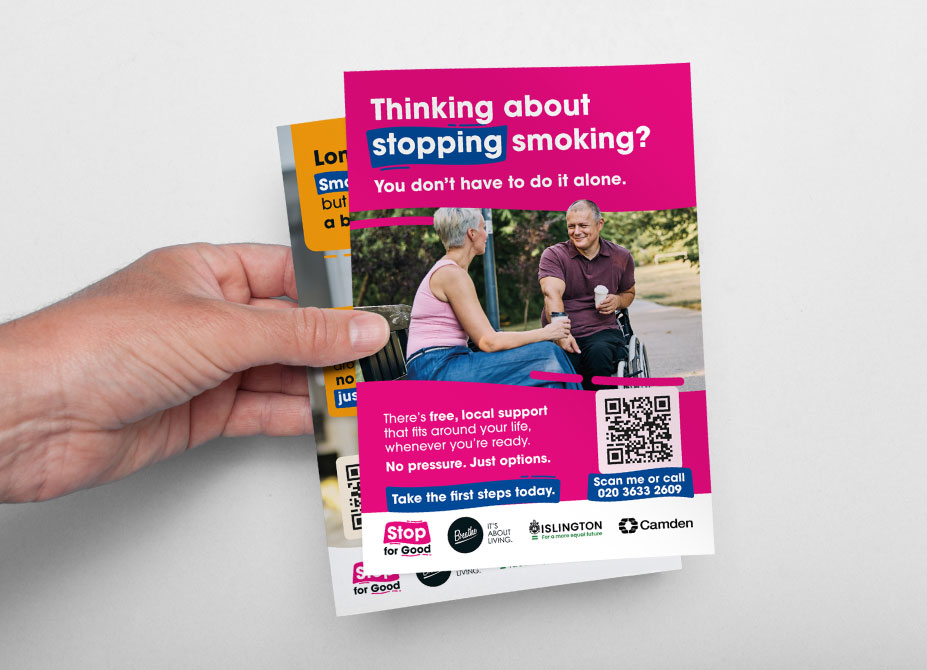
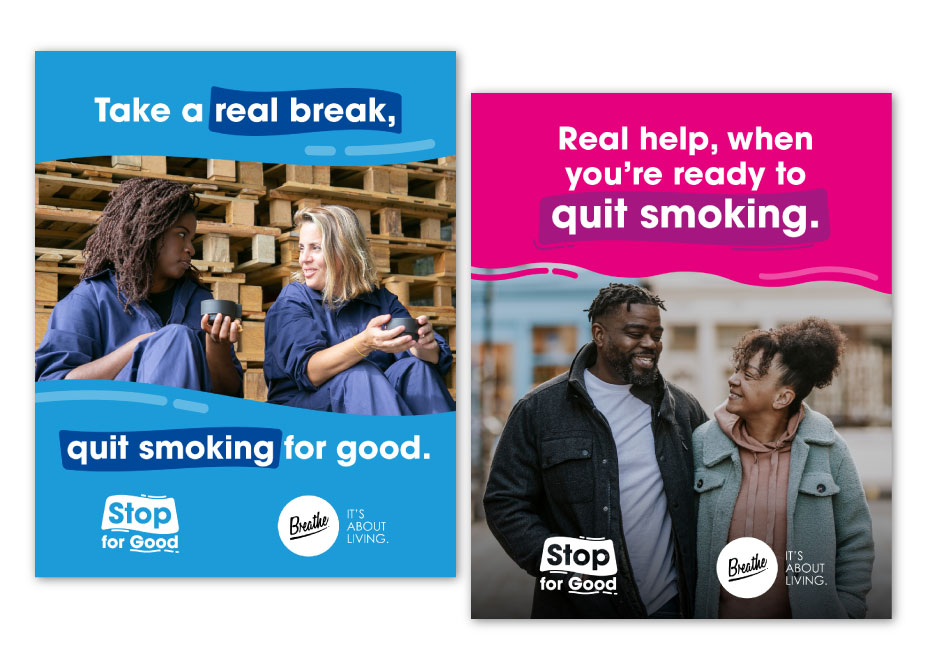
Tackling inequalities in smoking cessation
This project aimed to support the reduction of health inequalities caused by smoking in Islington and Camden, focusing on groups with higher prevalence and unique barriers. Our mission was to engage communities, such as Turkish and Polish speakers, Bangladeshi men, mixed White and Black Caribbean ethnic groups, routine and manual workers, LGBTQ+ communities, families with children under 5 and those planning to start a family, to co-develop tailored communications and service improvements. Additionally, by understanding their experiences and perspectives, our aim was also to make the Breathe stop smoking service more accessible, appealing and effective, ultimately supporting healthier, smoke-free lives for residents in Islington and Camden.
Listening to communities and their experiences
We used a behavioural science approach, combining secondary research, a multilingual community survey, in-person focus groups, and in-person and virtual interviews. This allowed us to explore attitudes, behaviours and barriers to accessing cessation support across diverse groups. Frameworks such as COM-B, the Behaviour Change Wheel, MINDSPACE and EAST guided our questioning, analysis and reporting, ensuring we captured not just what people do, why they do it and the best way to behaviour change.
Learnings about barriers, motivators and opportunities
Our research highlighted cultural, linguistic and practical barriers to quitting and accessing support, including low awareness of local services, stigma, and mistrust. Many priority groups faced additional challenges such as language barriers and cultural norms that discourage them from seeking help. LGBTQ+ communities cited peer acceptance and targeted tobacco marketing as obstacles. However, there was strong interest in culturally relevant, accessible information and support. The research allowed us to co-create messaging and found trusted community channels emerged as vital for driving engagement and supporting quitting attempts.
Recommendations based on Behavioural Science
Our insights informed recommendations and suggestions for targeted campaigns and service improvements. These included developing culturally tailored and accessible communications, strengthening partnerships with trusted community organisations and improving the Breathe website’s usability and inclusivity. We also advised using clear, supportive messaging that addresses stigma and builds trust. These actions will support and help Islington and Camden Public Health teams to better engage priority groups and reduce smoking-related health inequalities.
We were commissioned by Public Health Wales to develop a behaviour change campaign to decrease the number of young people taking up smoking.
More +For You & Baby is a campaign running in Derbyshire that aims to encourage families to quit smoking during pregnancy and consider breastfeeding after birth.
More +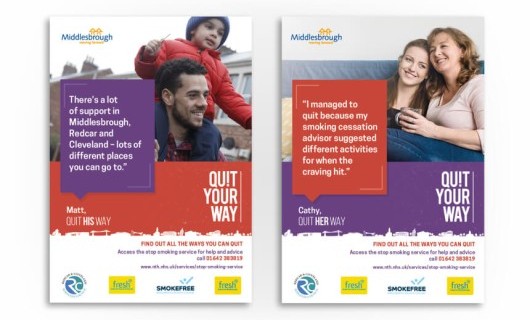
We worked with Middlesbrough Council to uncover local insight into smoking behaviours and develop a stop smoking campaign.
More +By entering your email address, you agree to be added to our mailing list.
We respect your privacy.
We never sell data.
Unsubscribe anytime.