Are We Still Rubbish at Recycling?
Recycling has now evolved from a chore to a crucial behaviour. Despite our recent efforts, media coverage suggests we're still falling short...
More +

Kiel in Germany is a city implementing innovative strategies to achieve Zero Waste City certification. In this blog we explore what they are doing - and how other cities are moving to zero waste.
Kiel, Germany, has recently captured international attention for its creative initiatives towards becoming the first Zero Waste Certified City in Germany. But what exactly does this mean?

The Zero Waste Cities Certification is a European certification created by Zero Waste Europe and with the help of Mission Zero Academy. Beyond being a certification, Zero Waste Cities represents a complete approach to sustainability, that aims to minimise waste generation through community engagement and circular economy practices, such as waste reduction initiatives, recycling and composting programmes, promotion of reusable products, etc.
Zero Waste Cities, like Kiel, are transforming waste management by working towards eliminating waste entirely and introducing a more circular economy that minimises emissions. Kiel’s creative initiatives work as great examples of what the UK could consider adopting as it progresses towards similar goals.
Let's look at what Kiel is doing...
Pay-As-You-Throw
Kiel’s main strategy is the “Pay as you Throw” [PAYT] system. Residents are charged based on the weight of the mixed waste they dispose of. This system creates a financial incentive to reduce unnecessary waste disposal and encourage a more mindful way of consuming. The impact has been great. In regions of Germany that have adopted similar schemes, there has been a significant 25% drop in mixed waste.

Other European cities are also adopting the PAYT system, inspiring many to consider being a Zero Waste Candidate and participating in Zero Waste Europe projects. For instance, Svilengrad in Bulgaria, was the first municipality in the country to pilot the PAYT system which led to a reduction in the amount of landfilled household waste and more separate collection of bulky waste. Another example is Ipsonas Municipality in Cyprus that has launched a PAYT pilot programme as well as a Reward Recycling programme, which gives discount vouchers for local stores to those who properly sort and recycle well, which not only incentivises proper waste management but also offers a more affordable option for residents.
Why does PAYT work?
The effectiveness of the PAYT system can be explained using Behavioural Science. What is one of our blogs without a little bit of BS, right?
People are adopting the PAYT because they have the Capability, Opportunity and Motivation to do so. They have the knowledge and Psychological Capability to recycle effectively, Physical Opportunities such as bins and recycling centres, and Social Opportunities to reduce waste. Financial incentives (Behaviour Change Wheel [BCW]) work as automatic motivators (and a positive reinforcement – Operant Conditioning), while the desire to act sustainable and reduce environmental impact provides reflective motivation.
Additionally, people generally prefer to avoid losses rather than obtaining equivalent gains (loss aversion). This means that the cost associated with excessive waste disposal (aka having to pay more) is perceived as a loss, which motivates them to reduce waste. Anchoring also plays a role, as the initial cost of waste disposal sets a reference point or baseline, making people more conscious of reducing waste and more sensitive to noticing any divergence from the baseline, any negative deviation would mean a loss. Ultimately, PAYT works because it leverages key behavioural principles, aligning personal and environmental incentives to make waste reduction more achievable. Also, by providing the right tools and motivations, it effectively encourages lasting change towards sustainability.
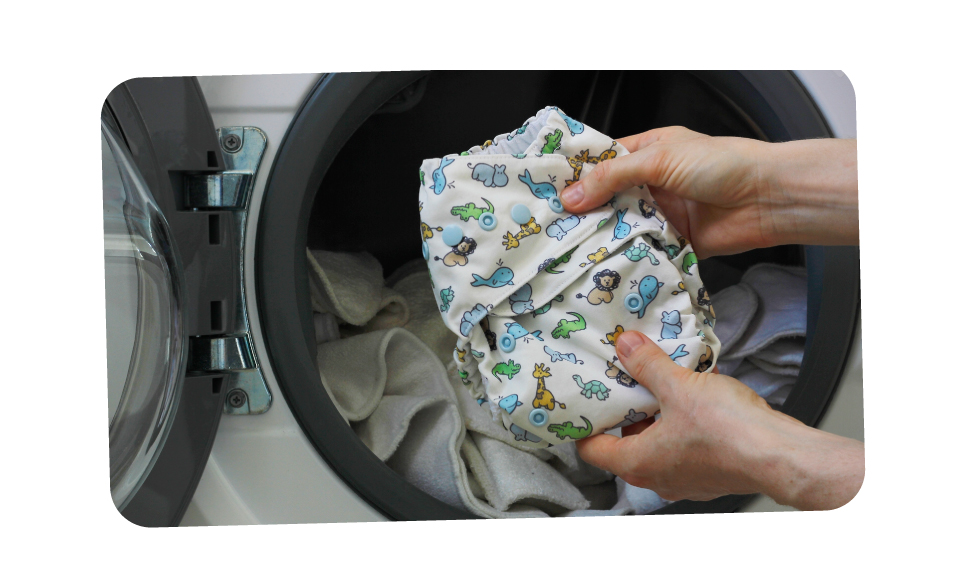
Kiel’s initiatives go beyond the PAYT scheme to encourage sustainable lifestyles among its residents. Recognising the environmental impact of disposable nappies, the city offers grants of up to €200 for families opting for cloth nappies. Each child uses around 6,000 disposable nappies in their early years according to the Zero Waste City website. The production, use and disposal of a single nappy generates around 550 grams (0.55kg) of CO2 equivalent emissions. This means that the cumulative carbon footprint of using disposable nappies for one child can amount to around 3,300 kg of CO2.
Why Cloth nappies work?
Financial incentives of a €200 grant provide a direct financial benefit and works as a Motivator for families to switch to cloth nappies. This has reduced the initial cost barrier making this option more Attractive. Additionally, the financial support has allowed families to afford the initial investment in cloth nappies (Opportunity). The Psychological Capability related to making an environmentally friendly choice has also enhanced their commitment to sustainable practices.
Other innovative approaches from Kiel include:
So, what can we learn from Kiel and how can we implement this in the UK?
We can learn from Kiel's success in achieving Zero Waste status that impactful change comes from integrating multiple strategies, not just one initiative alone. By adopting an approach across systems, cities can create a more sustainable future.
Global inspiration - Zero-waste initiatives beyond Europe
While cities like Kiel in Germany lead the charge for zero waste in Europe, other regions around the world are making similar strides, with Kamikatsu, Japan, standing out as a powerful example. Located in Shikoku island, Kamikatsu is on track to become Japan's first zero-waste town, setting a remarkable standard for sustainable living.
Kamikatsu’s transformation began in the 1990s, committing to a zero-waste future by 2003, with a series of small but impactful steps, such as introducing formal recycling programmes and establishing a unique Zero Waste Centre. This facility allows residents to sort rubbish into 45 categories for reuse, recycling, or disposal, while also encouraging reflection on consumerism through its design... a building shaped like a giant question mark.
The town now recycles around 80% of its waste, significantly above Japan's national average, and has integrated sustainability into all aspects of life, from upcycled thrift shops to a zero-waste brewery and hotel. Much like Kiel’s initiatives, Kamikatsu has adopted creative solutions, reflecting the power of local actions in driving significant environmental change.
Both Kamikatsu and Kiel are paving the way for a zero-waste future and showing us how policy, community engagement, and creativity can come together to build a more sustainable world.
Recycling has now evolved from a chore to a crucial behaviour. Despite our recent efforts, media coverage suggests we're still falling short...
More +
In a rush? Keep up with some of the important news stories in the past couple of weeks, including regular heatwaves predicted to 'kill thousands', recycled packaging 'may end up in landfill', new phone app causing cyberbullying and 73% of homeless people are actually working.
More +
Following the recent media coverage and wave of interest following Blue Planet 2 and the impact of waste and plastic in our sea, I've started to think; are we really rubbish at recycling?
More +
Waste has become a hot topic in recent years. Now more than ever before people are aware of how much they waste.
More +By entering your email address, you agree to be added to our mailing list.
We respect your privacy.
We never sell data.
Unsubscribe anytime.