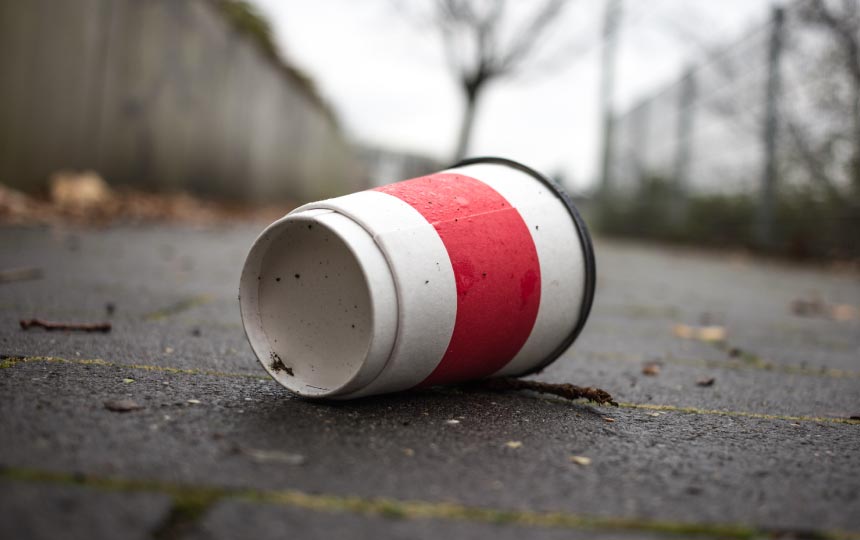
Are We Still Rubbish at Recycling?
Recycling has now evolved from a chore to a crucial behaviour. Despite our recent efforts, media coverage suggests we're still falling short...
More +

Over the border in Wales, people are really good at recycling and ranks second in Europe and third in the world for household waste recycling.
Waste has become a hot topic in recent years. Now more than ever before people are aware of how much they waste. But over the last decade we have focused our efforts on recycling as a solution. As a result, recycling is the default action. Not everyone recycles, but on the whole, recycling is a practice many people do get behind if it is made easy for them. And it seems that over the border in Wales, people are really good at recycling. Wales is first in the UK, second in Europe and third in the world for household waste recycling.
So, what are Wales doing, and what can we learn from our neighbours? What behavioural strategies are behind their success?
Establishing Mandatory recycling targets
Wales set mandatory recycling targets which they say have significantly increased their recycling rates. Household recycling has increased from 5.2% in 1998-99 to an impressive 60.7% in 2018-19. Municipal waste recycling rates have also seen a great rise in the same period, from 4.8% to 62.8% (Welsh Government, 2023).
Not everyone likes targets, but setting recycling targets is a good idea from a behavioural science perspective because it creates clear expectations and social norms. When defined goals are established in a legal framework, individuals are more likely to engage due to increased accountability and a sense of collective responsibility. Targets also provide measurable goals and track progress, allowing individuals to see the impact of their efforts and motivate the community to contribute to collective achievements.

Encouraging Greater Recycling
Wales has run a number of public awareness campaigns such as ‘Recycle for Wales’ and ‘My Recycling Wales’, which have been successful in encouraging consumers to recycle more items, more frequently. From the behavioural science POV, the ‘Recycle for Wales’ campaign was effective as it framed recycling as something that benefits the entire country, which tapped into a sense of national pride and social responsibility.
In addition, the ‘My Recycling Wales’ campaign was successful in providing clear information on where recycled materials go, helping to build trust and transparency. This campaign used an interactive website that provided detailed insight into what happens to recycling once collected by the local authority. This approach aimed to reduce the knowledge gap and increase people’s psychological capability, which is a key factor in changing behaviour. As a result, people felt more confident and motivated to participate, knowing exactly how their efforts were making a difference.
Financial and Infrastructure
Since 2000, over £1 Billion has been invested to improve recycling collection services. Wales offers a separate weekly food waste collection service, making organic waste recycling more efficient. Improved facilities at waste recycling centres have also made recycling more accessible and efficient.
In addition, Wales has expanded their recycling collection services to include more items and materials. In addition to this, Wales has implemented a new strategy that creates ‘friction’ in waste disposal by reducing the frequency of general rubbish collections. This strategy encourages more recycling by making general waste disposal less convenient. These inconveniences act as a nudge, prompting people to choose more convenient and accessible alternatives, like recycling instead of simply disposing of everything in the general rubbish bin.

Other Recycling Initiatives
Wales has introduced programmes for electronic and battery recycling such as dedicated collection points in community centres and events to encourage proper disposal.
Additionally, the country has increased the number of repair, upcycle and reuse shops, including initiatives like the ‘Repair cafés’, where residents can bring in broken items to be fixed by volunteers. Mattress recycling has been improved as well by establishing specialised recycling facilities that break down mattresses into reusable materials.
Wales introduced a carrier bag charge which has also significantly reduced plastic bag usage and encouraged the use of reusable bags. While England has also implemented a similar charge, the impact in Wales has been greater, as Wales was the first country in the UK to introduce a carrier bag charge in 2011 and it is also part of a broader strategy that includes other ways of promoting sustainable practices across different sectors.
What makes Wales better than England when it comes to recycling?
In England, the recycling rate has improved over the years, reaching 44.7% in 2021 from only 11% in 2000. The UK government has set some targets to improve recycling rates, aiming for at least 65% of household waste to be recycled by 2035. This shows a commitment to increase recycling rates, but why has Wales been more successful?
Wales has implemented a range of effective policies and practices that set it apart from England. In addition to the above, these include a mandatory separate collection of key dry recycling materials and bio waste, statutory recycling targets, PAYT (Pay- As- You-Throw) charges, and producer responsibility schemes. Wales also has a landfill tax and deposit refund system. In contrast, England only has a landfill tax and a separate collection of dry recyclable materials in place.
Behavioural science behind Wales’ success
Wales makes use of different behavioural tactics to drive recycling. Educational campaigns like ‘Recycle for Wales’ and ‘My Recycling Wales’ improve residents’ Physical and Psychological Capability, as well as their Reflective Motivation to recycle. These campaigns normalise recycling behaviours among residents (Norms - MINDSPACE) and build public trust by ensuring transparency with information from reliable sources (Messenger - MINDSPACE).
Environmental changes make recycling more convenient and the easier choice for residents (Easy- EAST). By improving facilities and services, and making recycling convenient and accessible, residents have the Physical Opportunity of engaging in recycling behaviours.
Incentives like the carrier bad charge (Incentives - MINDSPACE), along with feedback on residents recycling behaviours (Salience - MINDSPACE) create a sense of accomplishment. And, combined with a reduction of general waste collection acts as a prompt to nudge behaviour (Priming - MINDSPACE).
Recycling is made attractive through clear benefits and social proof of high recycling rates, social by fostering community participation and timely by introducing immediate changes like the carrier bag charge (EAST). Feedback mechanisms inform the public about the impact of their recycling efforts, creating a sense of responsibility and achievement.
We have added more behavioural science for you to understand why Wales is doing so good and how we in England can be better. In the following table you can see, according to the Behaviour Change Wheel, what Wales has accomplished, the intervention function and the policy categories. It shows how Wales has successfully implemented a range of strategies to promote recycling and waste management, which England can identify and adopt for its own waste management improvements.
So what?
Wales stands out as an example of success in recycling, leading the way with impressive household and local waste recycling rates. Through strong statutory targets, strategic infrastructure, investments exceeding £1 billion, and creative behavioural campaigns like 'Recycle for Wales' and 'My Recycling Wales', the country has developed a recycling culture that sets it apart from other countries. By making recycling convenient, incentivising participation, and promoting transparency, Wales has not only exceeded England on recycling, but also set a standard for effective waste management policies worldwide.
Recycling has now evolved from a chore to a crucial behaviour. Despite our recent efforts, media coverage suggests we're still falling short...
More +
A quick dive into the news stories that got us talking over the past couple of weeks, including anti-obesity programmes in primary schools not working, adopting a Scandinavian plastic recycling system and prescription e-cigarettes.
More +
A quick dive into the news stories that got us talking over the past couple of weeks, including industry recycling figures exaggerated, online porn checks delayed and elderly muscle loss explained.
More +
We’re working towards a world free of plastic waste, and you can help with these small steps on the road to becoming plastic-free.
More +

By entering your email address, you agree to be added to our mailing list.
We respect your privacy.
We never sell data.
Unsubscribe anytime.