We partnered with UK Power Networks to test and help validate Spotlight - an innovative machine learning model designed to identify customers who may be living in vulnerable circumstances. Across multiple phases, we combined predictive data, behavioural science and real customer insight to validate the model and learn how different audiences can be reached and supported more effectively. 

Image for UK Power Networks: Spotlight on Behaviour Change

The mission

Finding people who might otherwise be missed. 

UK Power Networks developed Spotlight to identify households who may benefit from additional support, such as the Priority Services Register (PSR). 

Our mission was to find out whether those predictions held true in the real world and then understand what UK Power Networks could do with that insight. We wanted to uncover not only who might need support, but the behavioural barriers preventing people from engaging, the messages that resonate and the channels that work for different audiences.

Image for UK Power Networks: Spotlight on Behaviour Change

The research

Putting predictions to the test. 

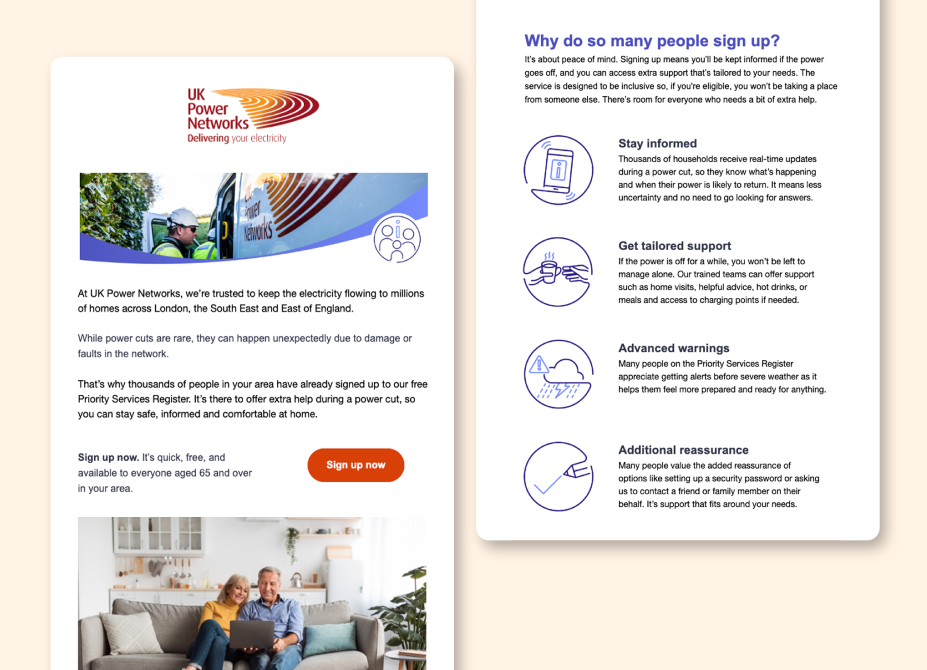
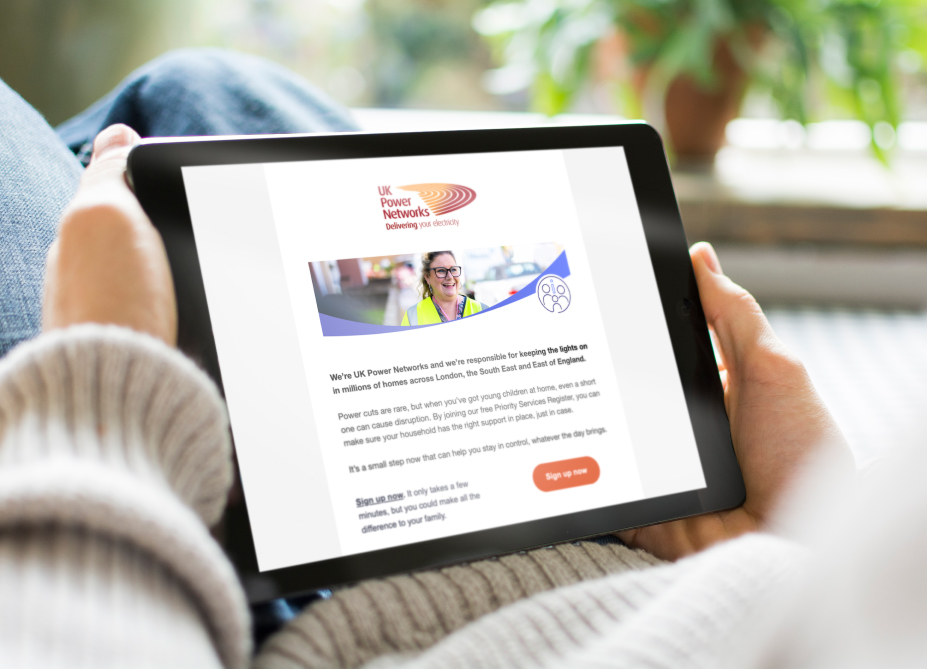
We started by applying behavioural science to PSR outreach with three priority audiences: households with children under five, people aged over 65 and medically dependent customers. 

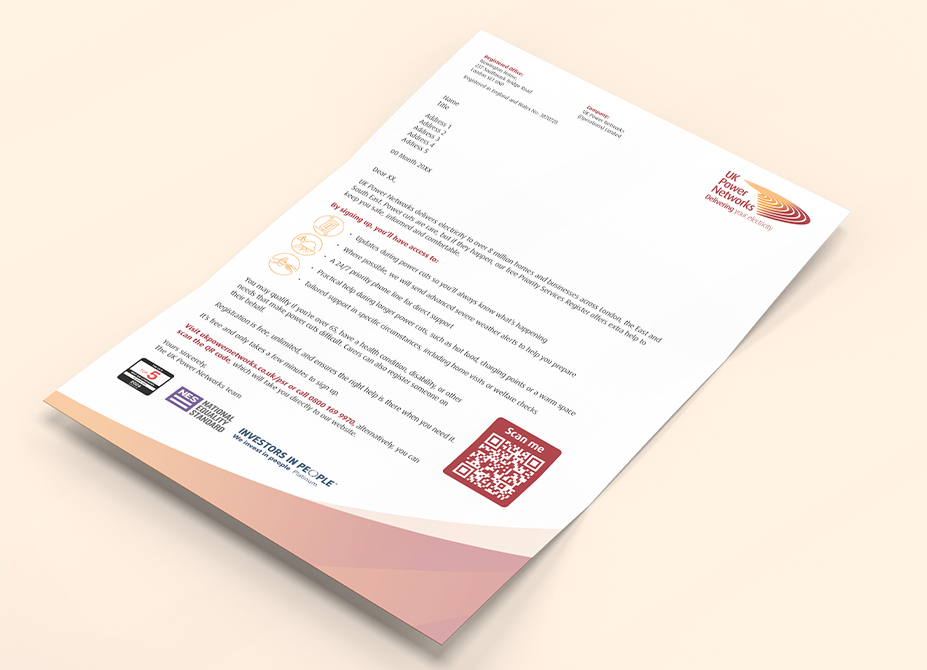
Using frameworks including COM-B, EAST and MINDSPACE, we explored barriers such as low awareness, uncertainty around eligibility, trust and perceived relevance. We then tested behaviourally informed communications across email, SMS, direct mail and telephone, including approaches based on Social Norms and Illusion of Control. 

This gave us an initial evidence base for how different audiences respond and showed that identifying the right people is only one part of the challenge. How, when and why you communicate with them matters too. 

Validating spotlight

Predicted vulnerability tested with real people. 

We then took Spotlight a step further, testing its ability to identify two particularly important groups: customers potentially experiencing fuel poverty and those at risk of being ‘left behind’ through digital exclusion, limited awareness or other barriers to support. 

Rather than assuming vulnerability based on data alone, we invited customers identified by the model to self-identify their circumstances through a carefully designed survey. 

The responses provided a sample with a 99% confidence level, giving UK Power Networks robust evidence that Spotlight was successfully identifying the types of vulnerability it had been designed to detect. 

But validation was only part of the value. The research revealed how financial pressures, digital access, confidence, trust and awareness can shape engagement and how differently people can respond even when they appear to share similar vulnerabilities. 

What we learned 

Different barriers need different approaches 

Alongside validating the model, we tested how message, channel and timing influenced engagement. 

General messaging, Social Norms and Illusion of Control were tested alongside different combinations of email, SMS, direct mail and telephone contact. This allowed us to see which approaches resonated with different types of customer and why. 

The findings reinforced that there is no single ‘vulnerable customer’ journey. Some people needed clearer information and greater awareness of the support available. Others responded to seeing that people like them were already engaging. For some, emphasising choice and control helped overcome reluctance to act. 

The insight gave UK Power Networks a much richer understanding of the people behind the predictions and practical evidence for designing future communications around their needs. 

Image for UK Power Networks: Spotlight on Behaviour Change

From testing to application

Using the insight to build better journeys. 

We then put the learning back into practice through a second phase of PSR activity. 

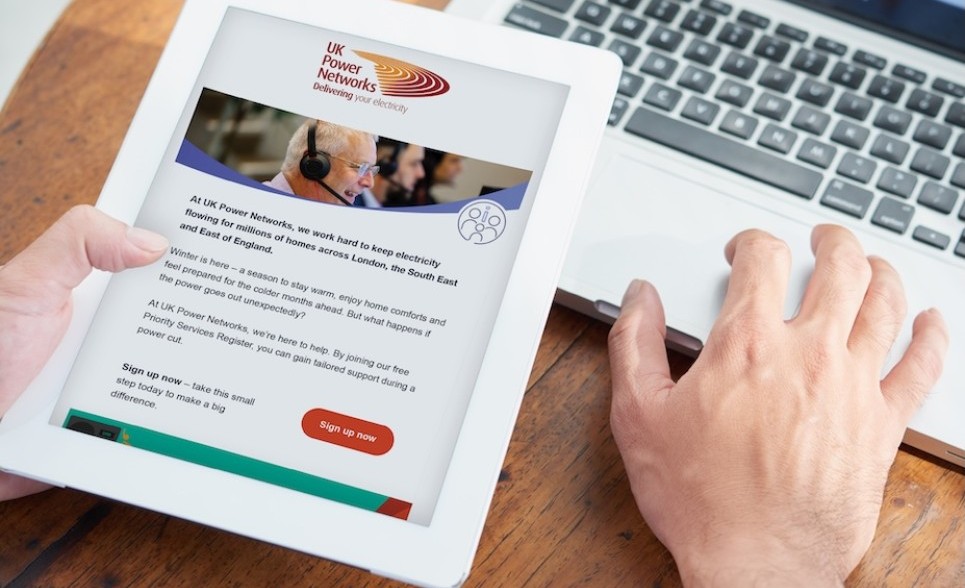
Rather than starting again, we refined the messaging, channel mix, timing and sequencing around what the first phase had taught us. We returned to households with children under five, people aged over 65 and medically dependent households, creating more tailored communication journeys for each. 

For parents of young children, the learning pointed towards journeys that built relevance before using Social Norms and Illusion of Control to support confidence and preparedness. Older customers demonstrated the importance of clear information, reassurance and trusted, accessible channels. 

Medically dependent households needed something different again. Here, repeated and reassuring communication mattered more than finding a single ‘winning’ message. Building confidence over time and providing different opportunities to engage proved particularly important for people making more considered decisions, sometimes alongside carers or family members. 

Image for UK Power Networks: Spotlight on Behaviour Change

The impact

A model validated. An approach refined. Better evidence for future support. 

Spotlight has moved from a predictive model into a tested, evidence-informed approach for identifying and engaging customers who may benefit from additional support. 

The work has provided robust validation of Spotlight while building a much deeper understanding of vulnerability, trust, confidence, digital access and engagement. Crucially, those insights have not simply sat in a report, they have been applied to subsequent activity, tested again and used to refine how different audiences are approached. 

The programme has also demonstrated something important about predictive technology: data can help identify where vulnerability may exist, but it should not make assumptions about individuals. Spotlight is most powerful when prediction is combined with opportunities for people to self-identify, behavioural insight and communications designed around their circumstances. 

For UK Power Networks, that means a stronger evidence base for who to prioritise, how to reach them and how to keep learning from the people the model is designed to support. 

99% confidence in validation findings
5 audiences model classifications validated
95%+ completion among people who started the validation survey
4 channels tested across customer journeys