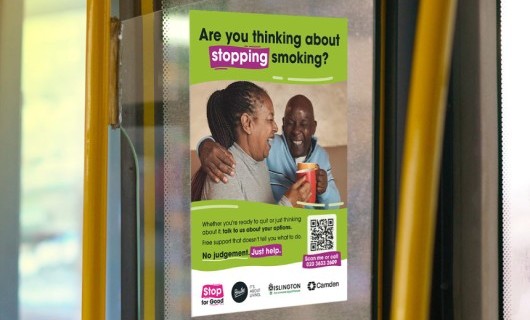
Community-Driven Insights and Campaigns for Smoking Cessation
Community-led research shaped personalised campaigns and service improvements, helping Islington and Camden tackle smoking inequalities among priority groups.
More +


Identifying the root causes of smoking and vaping
This project aimed to engage with the local community in Stoke-on-Trent to understand why people smoke or vape, and why they find it difficult to quit. By gaining an understanding of thoughts, feelings and behaviours from key priority groups (Under 18s, 18-34s and Routine and Manual Workers), we looked to develop insights that could be used to tailor future campaigns and service provision to meet local need.
Understanding the problem
We conducted a mixed methods approach, consisting of desk-research and both in-person and virtual qualitative engagement (focus groups and interviews). Behavioural science was embedded throughout. This enabled us to understand barriers to accessing stop-smoking services across different groups, with a focus on how these barriers could be removed to improve engagement, as well as looking at general smoking behaviours and communication preferences. Through this approach, we were able to gather data that was analysed through frameworks including the COM-B model and cognitive biases in order to develop actionable insights.
We identified a lack of knowledge around quitting services and the options available, especially among younger people. Those who had accessed services reported having a variety of different experiences, but a common theme was that support tended to ‘drop off’ after a set period of time, leading them to start smoking again. People were able to quit for short periods of time, but it wasn’t seen as an immediate priority, and they didn’t feel that they were capable of stopping for good. Social factors were also a significant influence – smoking helped people to connect with others, and they didn’t want to feel ‘left out’ when friends smoked.

Building Confidence For Smoking Cessation
We translated audience insight into a practical, targeted set of recommendations for both communications and systemic changed. Informed by the research, we also developed creative communications for reaching and engaging each audience. Grounded in behavioural science, the campaign was designed not just to raise awareness of local stop smoking support, but to reshape perceptions, build confidence and make quitting or avoiding smoking and vaping feel more relevant, achievable and supported. We developed a suite of materials across three priority audiences, ensuring the overall campaign felt consistent in look and feel while still responding to the different barriers, motivators and contexts identified for each group. Across the campaign, we used bold and accessible design, concise messaging and clear calls to action to reduce friction and help people take the next step towards support.
Targeting Under 18s
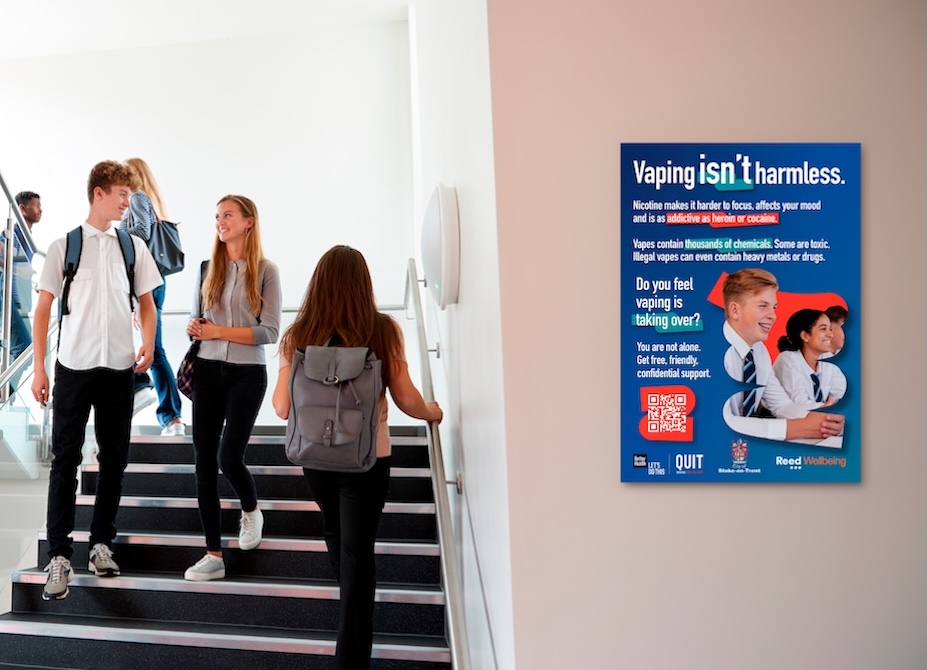
To reach under 18s, we worked closely with the local Young People’s Smoking and Vaping Prevention Office to develop a schools-based vaping prevention campaign. This included posters, student flyers, roller banners, lesson plans, teacher toolkit materials and supporting website copy. The messaging challenged the idea that vaping is normal or harmless, while focusing on short-term issues that mattered to young people, such as concentration, sport, mental wellbeing and peer influence. The tone was supportive and non-judgemental, helping young people feel that making a different choice was both realistic and socially acceptable.
Targeting Adults Aged 18-34
For adults aged 18–34, we designed the Stoke Smoking Habit Builder (also referred to as the Quit Prep Planner) as a self-guided tool to help people prepare for quitting in a manageable way. This seven-day reflective journal helped users identify smoking triggers, plan alternatives and recognise progress before committing to a formal quit date. Posters and campaign messaging presented cessation as an ongoing journey, that it didn’t require a perfect immediate stop from day one, and could fit around daily life and routine. This approach was designed to build confidence and give people more control over their quit journey.
Targeting Routine and Manual Workers
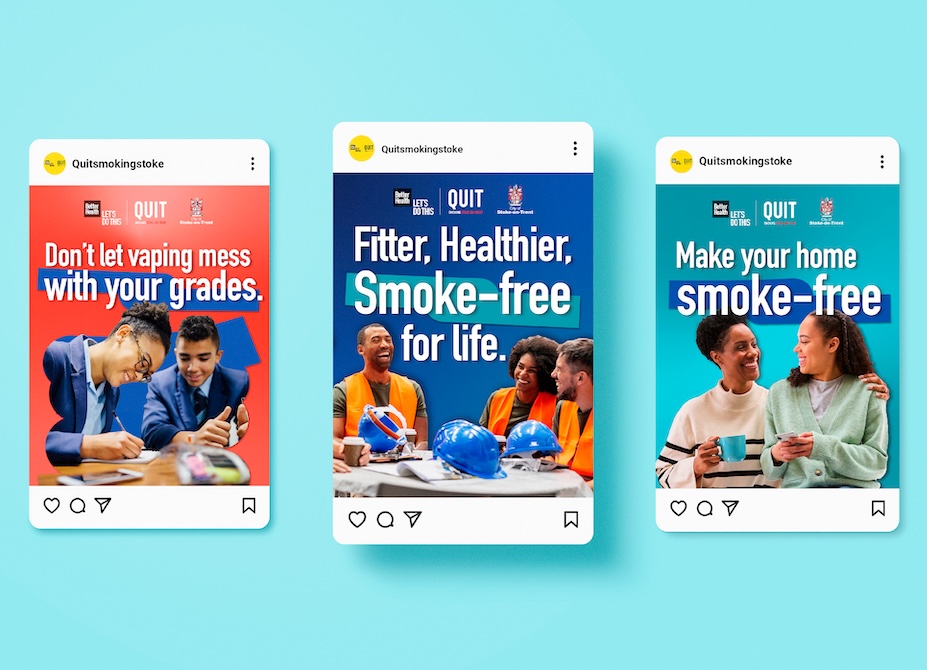
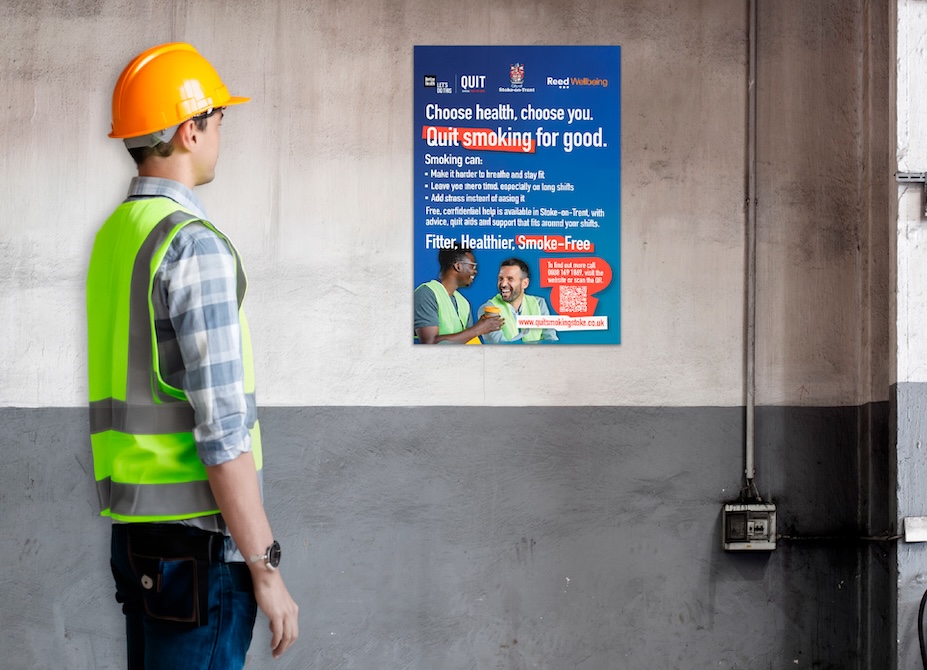
For routine and manual workers, we created a practical employer toolkit designed to make stop smoking support more visible, relevant and easy to engage with in workplace settings. The toolkit included online articles, newsletter content, FAQs, flyers, posters, social media assets and guidance for managers to start supportive conversations. The creative approach reframed quitting as a sign of strength, resilience and professionalism, while also highlighting benefits such as better breathing, more energy and more money saved. By working through employers, the campaign aims to make support feel more normal, accessible and embedded in everyday working life.
Community-led research shaped personalised campaigns and service improvements, helping Islington and Camden tackle smoking inequalities among priority groups.
More +
Behavioural insights research and communications to help West Berkshire reduce smoking among routine and manual workers.
More +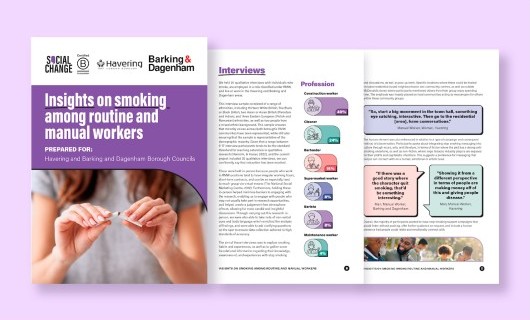
Exploring smoking behaviours in routine and manual workers across two London Boroughs, and how to engage them with cessation support.
More +By entering your email address, you agree to be added to our mailing list.
We respect your privacy.
We never sell data.
Unsubscribe anytime.