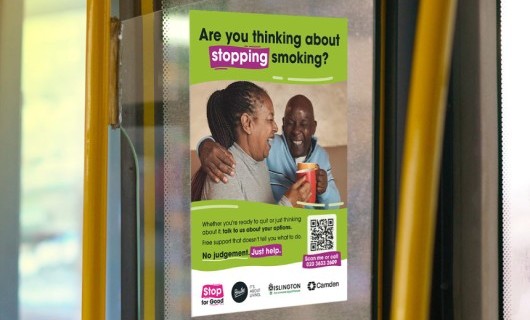
Community-Driven Insights and Campaigns for Smoking Cessation
Community-led research shaped personalised campaigns and service improvements, helping Islington and Camden tackle smoking inequalities among priority groups.
More +

Smoking Cessation in Routine and Manual Workers in parts of Lincolnshire
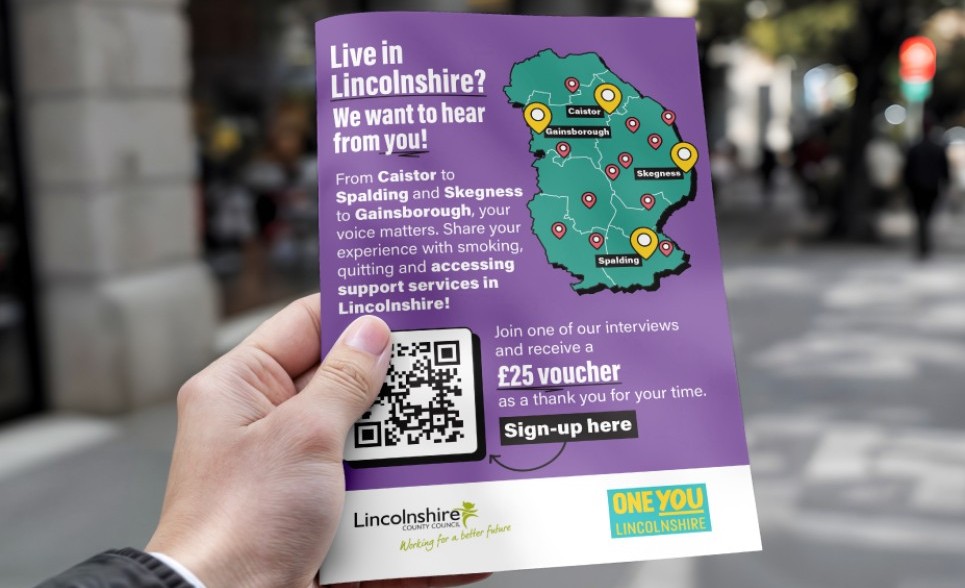

Traditional approaches might miss routine and manual workers
Smoking prevalence in Lincolnshire stands at 14.2%, significantly exceeding the national average of 11.6%. Among routine and manual workers, the rate escalates to 24.4%, more than three times higher than among managerial and professional roles. Lincolnshire County Council commissioned this project to understand why engagement with existing cessation services from One You Lincolnshire remained low within this priority group and to identify how services could be reframed to be more relevant and appealing. Our objective was to uncover the underlying social, psychological, and environmental factors influencing smoking behaviour and to develop practical, evidence-based recommendations to help reshape communications and service delivery for this population.
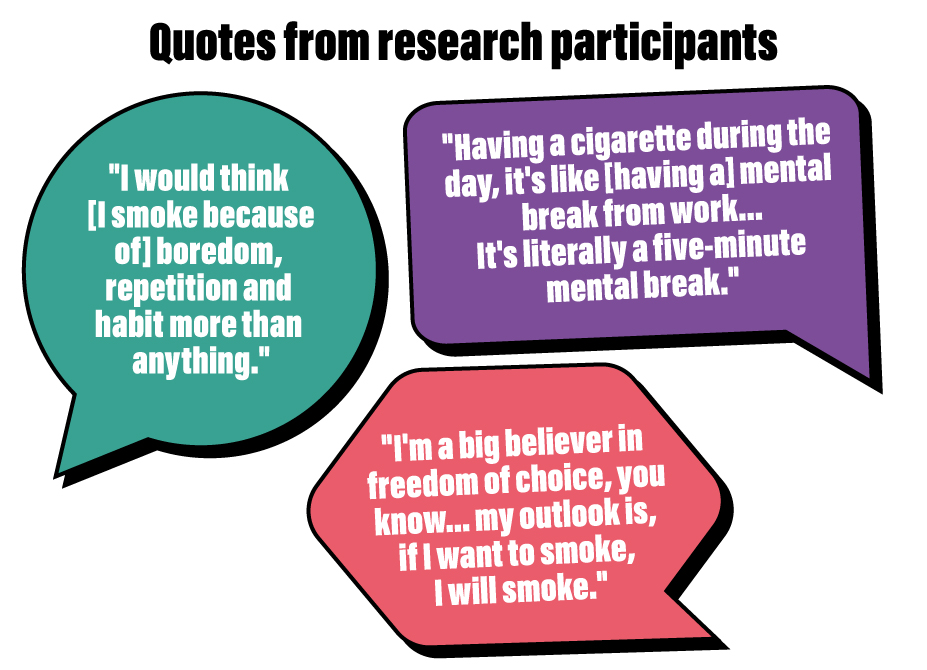
Engaging with the community to understand their experience
To ensure authentic insight, our engagement approach prioritised going beyond traditional research settings. We conducted a countywide survey, ran interviews and focus groups with 14 routine and manual workers, and met participants where they were, in workplaces, break areas, and public spaces across Lincoln City, West Lindsey, North Kesteven, and South Holland. We connected through local networks, used flexible in-person and online formats, and visited businesses directly to create a comfortable, conversational environment that built trust and encouraged honesty. This approach helped capture the real voices, habits, and motivations behind smoking in day-to-day working life.
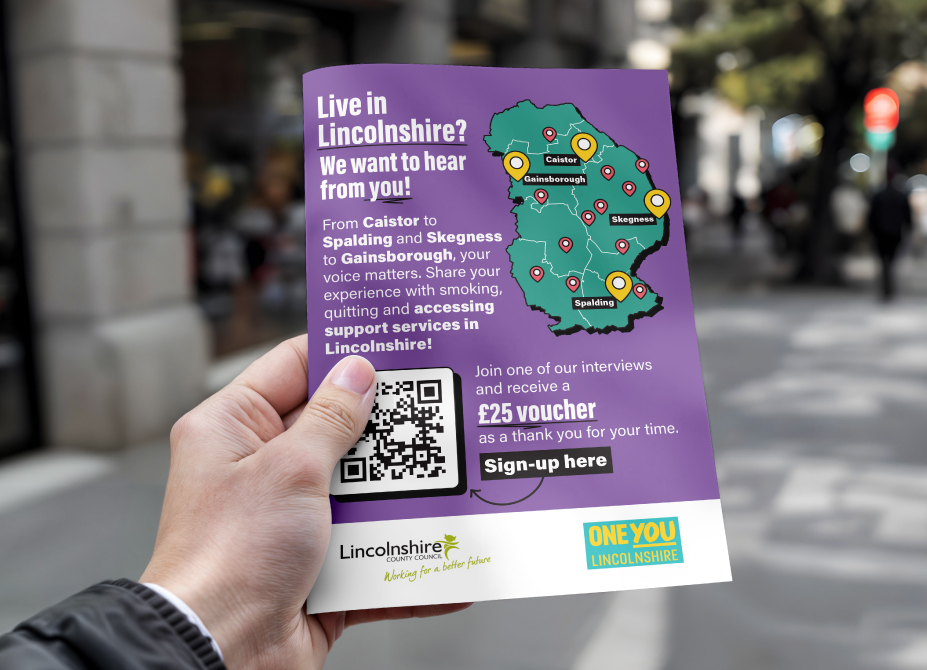
Autonomy, social identity, and the real barriers to quitting
Our research identified four key behavioural insights. First, routine and manual workers have high confidence in their ability to quit but find maintenance far more challenging than initial cessation. Second, smoking serves a dual function, it is both a stress management tool during demanding shifts and a mechanism for social connection with colleagues, creating powerful social and emotional ties that extend beyond nicotine dependence. Third, autonomy is central to identity within this population. Directive, pressure-based messaging triggers psychological reactance, making people more resistant to change rather than less. Finally, workers are motivated by immediate, tangible health improvements such as improved breathing or stamina, not abstract future disease risks. Formal cessation services feel disconnected from their lived experience, creating a credibility gap where professionally delivered support is perceived as irrelevant to people like them.

Reframing cessation support
We developed 15 recommendations to address autonomy, motivation, and maintenance barriers rather than simply improving accessibility. These recommendations prioritise respect for personal choice over compliance, authentic peer-led delivery over clinical experts and immediate, tangible support at the moment of decision rather than distant health warnings. We also developed a comprehensive internal communications strategy and practical implementation roadmap for Lincolnshire County Council to embed these behavioural insights. The strategy fundamentally reshapes how the Be Smoke Free service presents itself, from formal, programme-based language to something that feels human, empathetic, and grounded in working life. This evidence-based communications framework ensures future campaigns speak directly to routine and manual workers' values of autonomy, credibility, and respect, fundamentally reshaping how cessation support is perceived and accessed across Lincolnshire.
Community-led research shaped personalised campaigns and service improvements, helping Islington and Camden tackle smoking inequalities among priority groups.
More +
Behavioural insights research and communications to help West Berkshire reduce smoking among routine and manual workers.
More +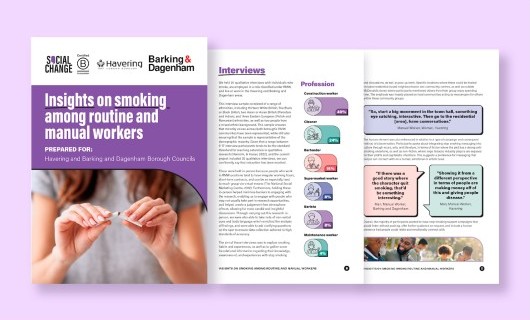
Exploring smoking behaviours in routine and manual workers across two London Boroughs, and how to engage them with cessation support.
More +By entering your email address, you agree to be added to our mailing list.
We respect your privacy.
We never sell data.
Unsubscribe anytime.