Meet Marci: A Week of Work Experience at Social Change
Marci, a 17-year-old student from Lincoln College, joined us for a week of work experience. Read on to find out what she got up to and how the experience shaped her future ambitions.
More +

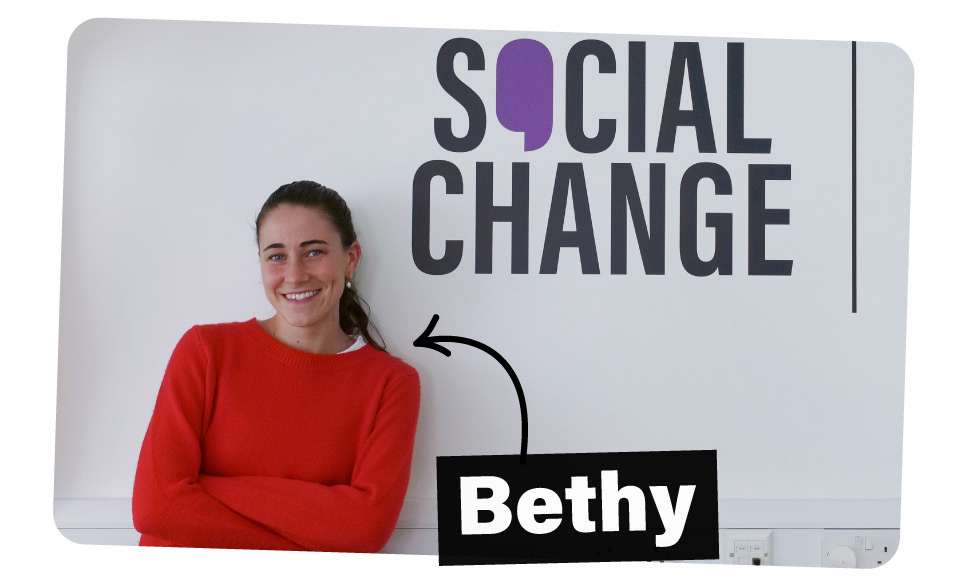
Last week, we welcomed two newly graduated University of Lincoln Graphic Design students, Bethy Wells and Monai Clarke, to Social Change for a week of work experience.
We first met Bethy and Monai through their final year degree projects, where students were challenged to use design to respond to real-world social issues and explore how creativity could help create positive change. Our team had the difficult job of choosing two stand-out projects, with Bethy and Monai winning the opportunity to spend a week with us and experience how we approach these kinds of challenges in practice.
Of course, we couldn't have them here without giving them a challenge of their own.
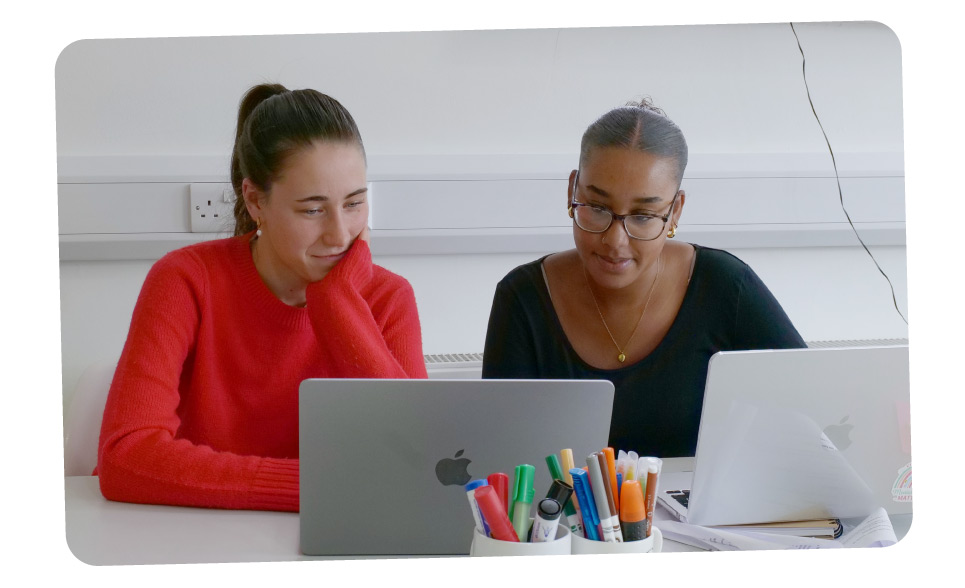
We set them a brief around reducing excess water use. Most of us don't actively want to waste water or harm the environment, but that doesn't mean our everyday behaviour always reflects our intentions. Water use is often habitual and largely invisible. We turn on the shower or tap without consciously thinking about how much we're using.
Rather than simply deciding that students use too much water, we started by thinking about when habits might be easiest to change.
Starting university is a natural point of disruption. For many young people it means moving away from home, living independently and creating new routines. The environment and cues around everyday behaviours change too, giving us an interesting window to interrupt old habits before new ones become established.
The team explored research suggesting that people dramatically underestimate their water consumption. They also looked at the role showers play beyond hygiene, particularly among Gen Z, where they can be part of a wider ritual involving music, skincare and relaxation.
The challenge wasn't to tell students to stop enjoying their showers. It was to help them recognise what was enough for them and gradually remove the unnecessary water use around it.
Before getting into the creative work, Bethy and Monai used COM-B and the Behaviour Change Wheel to explore what was driving the behaviour and where there might be opportunities to influence it.
For Bethy, this brought a completely different dimension to the design process.
“What I particularly loved was the behavioural science side of the project. I’d never worked with models like COM-B and the Behaviour Change Wheel before, and I think they’ll genuinely shape how I approach future projects.”
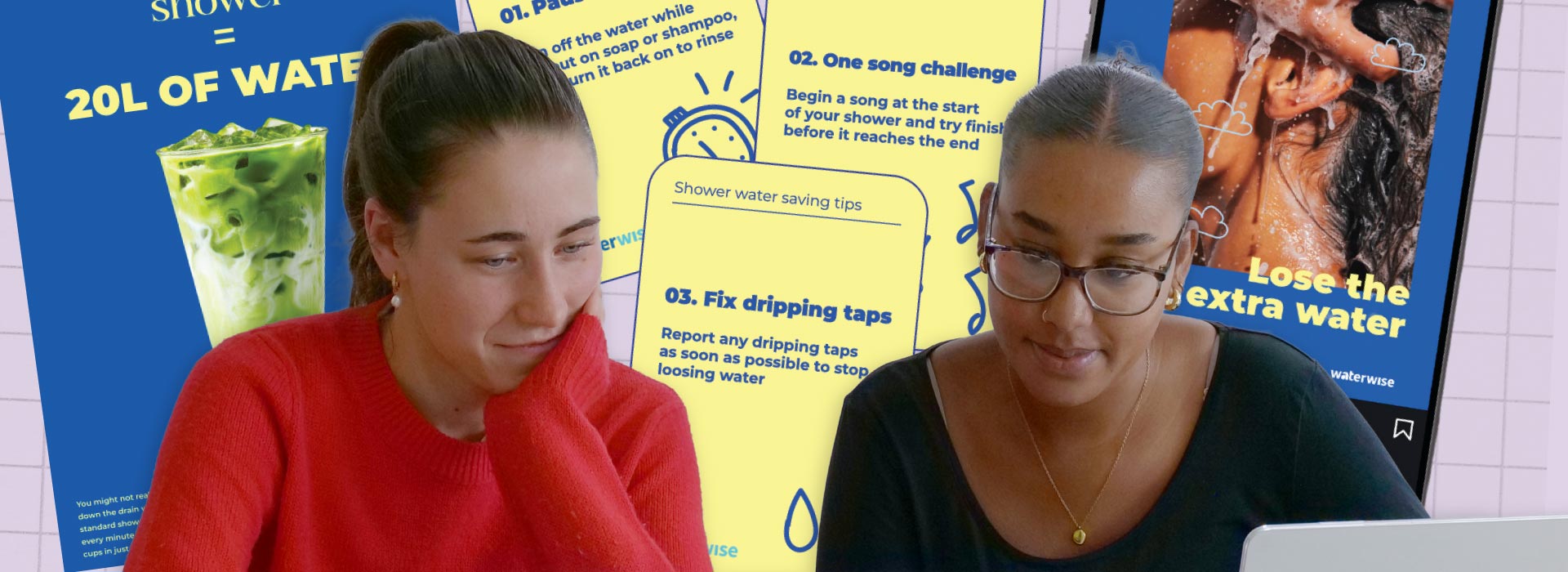
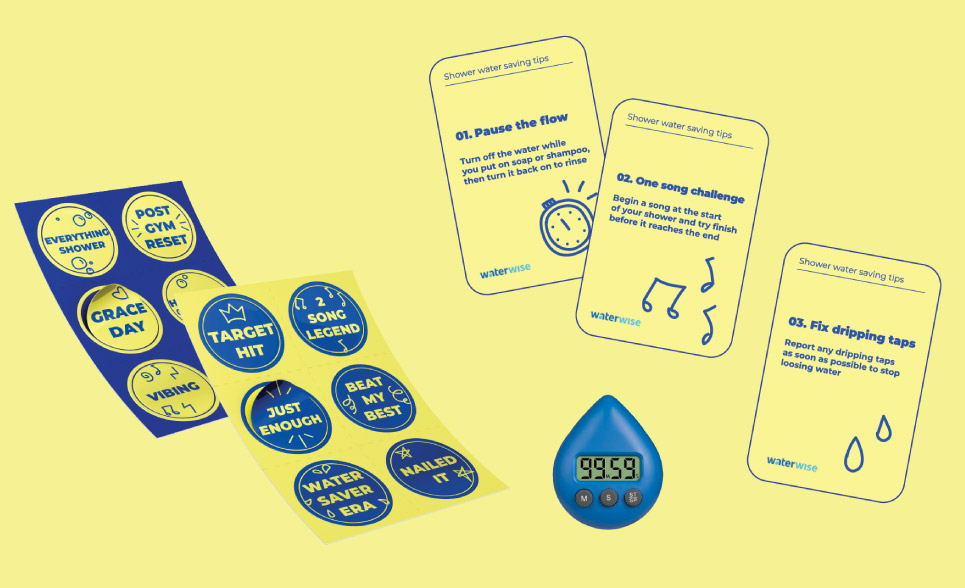
Their thinking developed into Water Wise, a campaign focused on making invisible water use visible. Rather than talking about abstract numbers of litres, posters translated water consumption into familiar things such as matchas and protein shakes, helping students visualise just how much water could disappear during a shower.
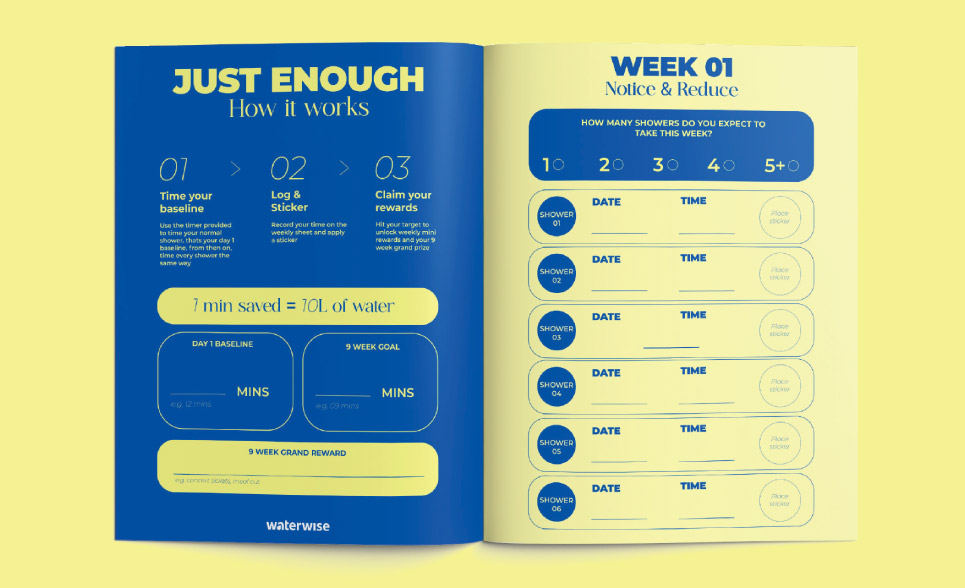
They also developed a shower timer and habit tracker, giving students a way to set their own goals, see their progress and gradually establish a different routine. The idea wasn't about restriction or expecting perfection. It was about making small improvements at a point in life when habits are already changing.
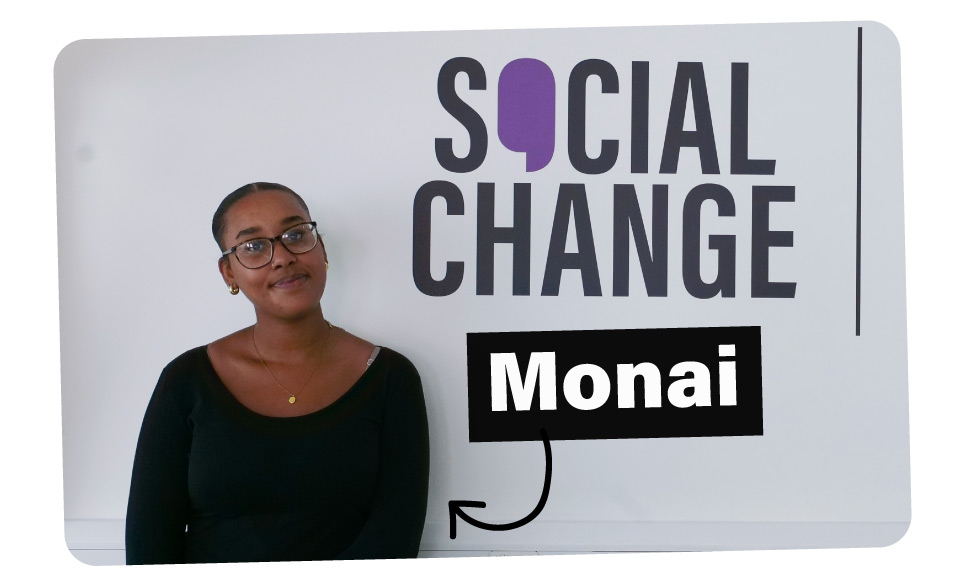
Alongside the challenge, Bethy and Monai spent time with different members of the team and saw how research, behavioural science, strategy, marketing and design come together across our work.
For Monai, seeing that process in a real agency environment was a valuable part of the experience.
“It was great to see how the skills I developed at university are applied in a real agency environment, and to gain an insight into how the team use research, design and behavioural science to approach real-world issues.”
They finished the week by pitching Water Wise back to our team and talking us through the thinking behind their ideas.
Work experience shouldn’t just be about watching other people work. We wanted Bethy and Monai to have the opportunity to tackle something real, test their thinking and see how design can be strengthened by understanding the behaviour behind the problem.
We were really impressed by what they achieved in just a week, taking the challenge from research and behavioural insight through to a creative campaign designed to make water use more visible and help students rethink their habits.
So rather than just tell you about it, take a look at what they created. Below, Bethy and Monai share the brief, the research that shaped their thinking and how it all came together in Water Wise.
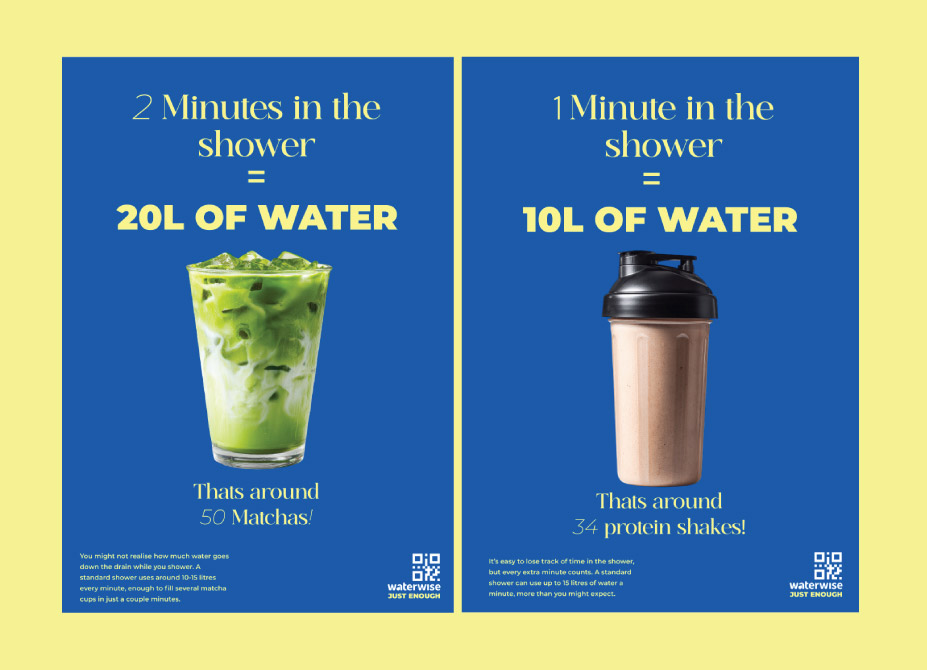
Reducing excess water usage among university students
Across the UK, household water usage is much higher than people realise. Bathroom use alone accounts for half of this water use. Students are a particularly relevant audience as studies show they tend to take long showers. Our mission isn’t to stop students enjoying their showers but to help them visualise the amount of water they use and encourage small steps toward reducing that usage. To use just enough without taking away the ritual they enjoy. Reducing excess water usage among university students
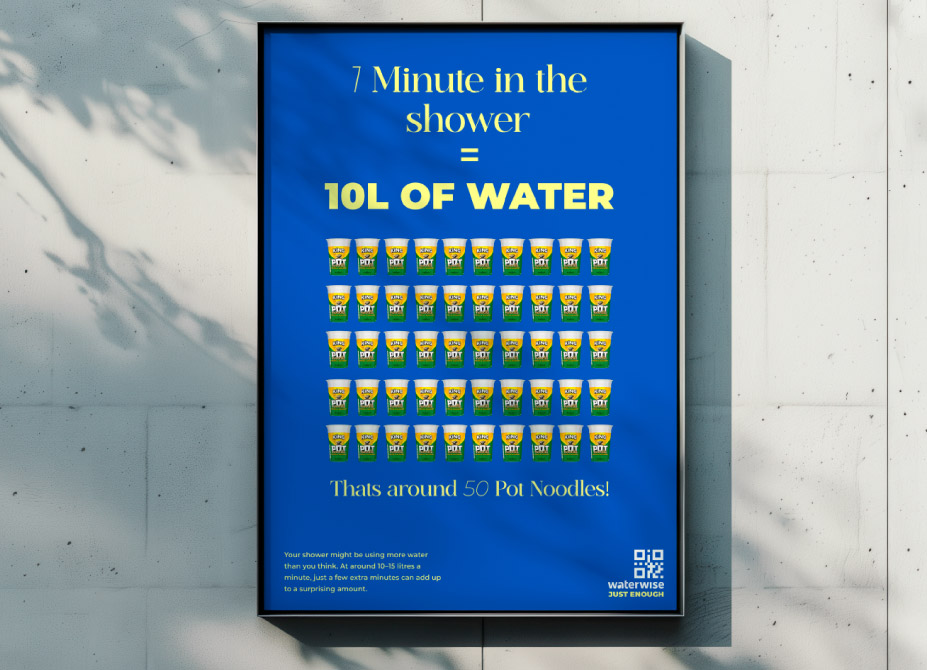
Knowledge not being changed into action
Research shows that people dramatically underestimate how much water they use, many estimating they use around 30L per person per day when in reality it is closer to 140L, and 180L among students. This is because water use is so easily accessible and as usage isn’t visually measured it is easy to be unaware of how much has been used/wasted.
The university student population (largely Gen Z) are known to care about sustainability however there is a knowledge-behaviour gap, where this knowledge doesn’t necessarily turn into action. It has become increasingly common for Gen Z to take longer showers, especially as showers have become more than just about hygiene, being a time for self-care, relaxation, skincare and music.
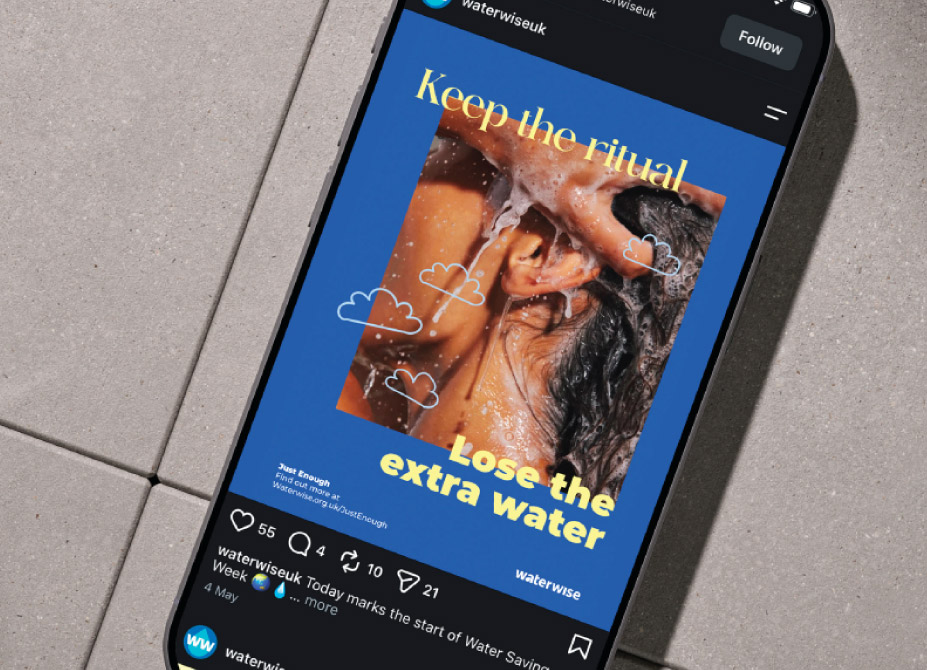
Making water waste visible and prompting action
Our campaign, Just Enough, seeks to encourage students to identify what is enough shower time for them and gradually remove unnecessary time. The campaign responds to our research findings by making the invisible water usage visible, this is done through posters translating litres/time into familiar things such as matchas/protein shakes, helping to make the amount of water tangible. The campaign also shows ways to keep the shower ritual without using excessive water, demonstrating that it is possible to do both.
A shower timer and habit tracker again make the water usage visible, as well as, measurable, so that students can track their progress and provide an opportunity to create lasting water saving habits. The overall thought of the campaign to be about small personal improvement rather than restriction.
Marci, a 17-year-old student from Lincoln College, joined us for a week of work experience. Read on to find out what she got up to and how the experience shaped her future ambitions.
More +
Rather than framing social media as a problem of individual choice or parental control, this article explores how platform design drives excessive use among teenagers. It argues that meaningful change will come from addressing the systems and incentives behind social media, not simply restricting access.
More +
Public health challenges such as poor diet, smoking and binge drinking are just a few lifestyle issues that could be addressed with some ‘design thinking’ according to Design Council and the Local Government Association (LGA). Their Design in the Public Sector programme is now open for applications with the aim of attracting forward thinking councils focusing on prevention.
More +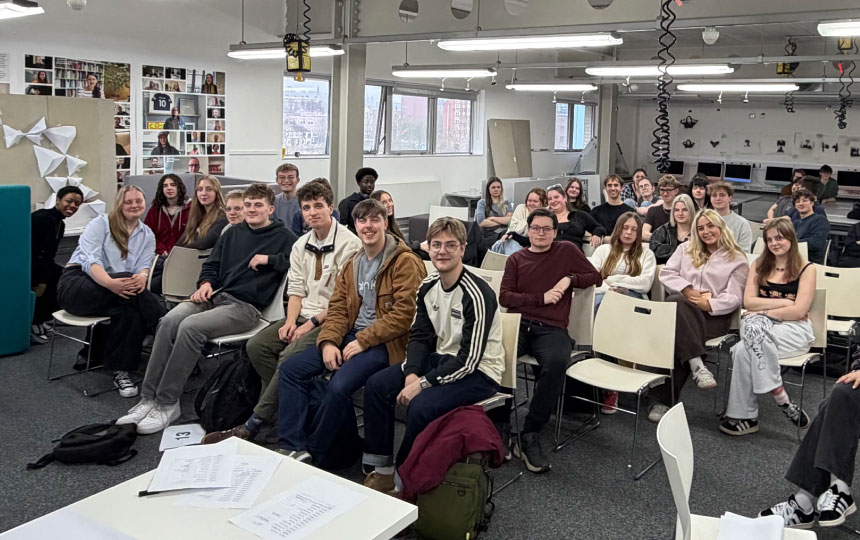
Social Change Director Kelly Evans was invited to introduce the social design module and talk to students about working on real-time social issues and how ‘design thinking’ is important when designing potential solutions to what is often referred to as ‘wicked problems’.
More +By entering your email address, you agree to be added to our mailing list.
We respect your privacy.
We never sell data.
Unsubscribe anytime.