

Who is the most attractive couple? Who can bench the most? Did you hear that Amelia sent Dan pictures?
For today's teens, social media is where these conversations happen. An accepted part of modern life, it’s an internationally recognised issue for young people, yet current legislation in the UK is failing to protect our children. Should we follow Australia with a complete ban for under-16s as proposed, or instead delve further into why platforms designed for connection are actually ripping our society apart? Let’s look at why a blanket ban isn’t the answer, and how we can better protect all users, not just teens, from harmful and offensive content.
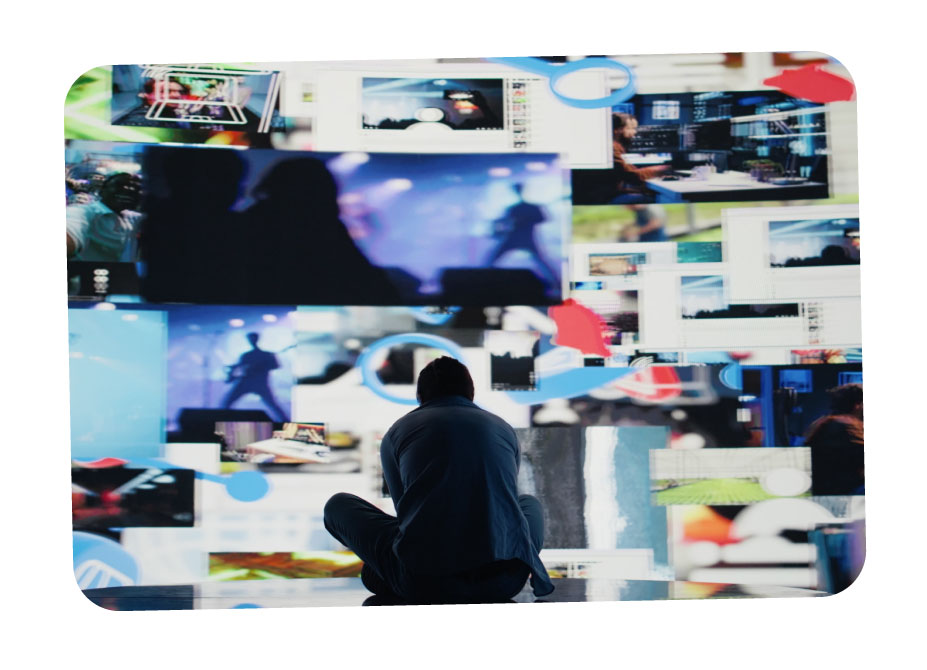
The General Feeling
I consider myself quite well versed in the views of under-16s regarding social media, given that I was one less than a year ago, but to get a more comprehensive overview of how teens feel I had a look at the widespread consensus regarding the proposed ban. Unsurprisingly, parental backing for the ban far outweighs that of their teens, with 70-80% of UK adults showing support for the ban (as cited by the BBC based on YouGuv data). Various UK polls show that 86-92% of parents are on board with the ban. These figures reflect my own experience in a secondary school; most parents encouraged lower screen time, while many students saw those warnings as something to be worked around rather than followed.
Although these statistics start to establish the bigger picture, we must remember that a ‘yes-no’ question fails to consider the nuance of debate. We question the future and safety of social media constantly within lessons and assemblies, fully acknowledging why support for the ban is justified, yet because the returned answer is usually ‘no’, young people are often seen as ignorant to the dangers of their social media usage. On top of that, teens have a book of tricks for avoiding the checks, no matter how watertight they may seem. Many of my peers simply see the ban as pointless, understanding that the tech-savvy amongst us will always find a way. However, focusing solely on teens misses the bigger issue, as harmful social media habits aren’t restricted to the younger generations. Although the way adults and teens use social media is different, both groups are vulnerable to its addictive features. What many fail to see is that it isn’t an us vs them argument – we all fall foul of doomscrolls and AI fakery, so we must question if a ban for only under-16s is appropriate.
2020 – The Point of No Return
Along comes COVID-19 and lockdowns reshape everyday life worldwide.
Much like ventilators and toilet paper, social media became a lifeline to more in society than ever before, many of whom never or rarely used it previously. The human connection we craved could be found with a simple click onto Facebook or Instagram. A whole world opened up with everyone online, and these single clicks evolved into habit. As the virus died away, it left complications that fundamentally changed the way we view social media. Life was condensed onto a computer, and no matter how cautiously we approached the reintegration of face-to-face communication, a generation, my generation, was left wondering what’s it’s like to sit Year 6 SATs, enter Year 7 with hands not covered in sanitiser, and make the move from primary to secondary without lessons bound to Teams calls. It’s therefore not surprising that (contrary to popular belief) most of Gen Z don’t want to spend all day alone on a laptop. 30.2% of ages 16-24 work from home in the UK, compared to 51.3% of ages 35-49 choosing this option. Other factors contribute to this too, of course, such as seniority and the nature of the work, but lockdown massively widened the gap between younger and older generations working from home.
This reluctance to work remotely highlights the difference between screen time and social media. The addictive nature of social media gives a sense of relief (though it has been shown to increase stress levels), while the actual act of sitting in front of a screen is not at all appealing to younger people who want the buzz of human activity, perhaps to make up for the lost time during the COVID years. Developing into addicted teens and passing these behaviours on to younger siblings is to be expected when both teachers and friends could only be accessed at the end of a screen. For young people, the ‘new normal’ was a staple of childhood and early teenage years, only worsening with each new intake of school children who lost valuable chances to develop social skills. Banning this lifeline could lead to increased feeling of isolation – with the online community they’ve grown so used to gone, many could feel even more lost than before.
Puppets and their Masters
As a sixth former, social media has been a large part of my life for the past 6 years, with the majority of my peers using at least one platform on a regular basis. I’ve seen first-hand the plethora of ways that young people skirt the rules of legal profile creation, and the subsequent consequences this can cause: bullying, distribution of intimate images, and isolation, to name few. The proposed ban has gained support from only 15% of young people according to the BBC. At first glance, this statistic suggests that young people simply don’t care about the risks of social media, and it got me thinking – this generation clearly understand the dangers but frequent these platforms despite that. So what’s going wrong?
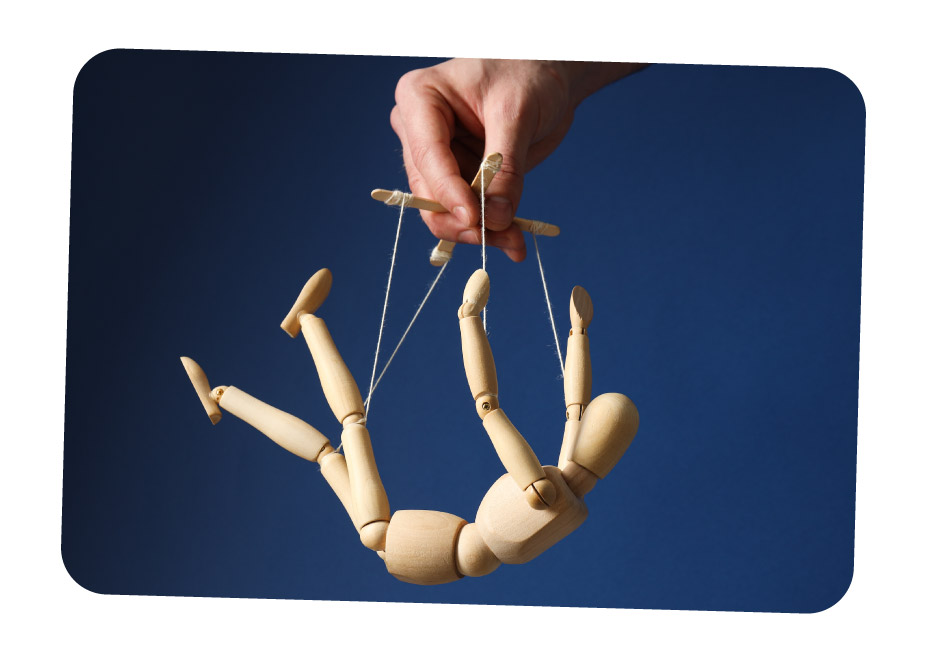
The COM-B model of behaviour states that, to modify actions, we must change the determinants: either capability (the knowledge/ ability needed to carry out the behaviour), opportunity (remove the barriers to completing the behaviour), or motivation (the internal processes needed for the behaviour). The issue comes with not possessing the reflective motivation to adjust the way we use social media, which is not necessarily the fault of the child. We are shown the dangers, yet the immediate rewards the platforms offer often feel more significant than the long-term risks. When a platform is designed to keep you in the endless loop of doom scrolling, can we really blame young minds for lack of regulation regarding their time on social media, and if not, would the ban really help? I look at my classmates and wonder how such intelligent young people could be so addicted to their phones, joking about ‘brainrot’ and TikTok slang, when perhaps it’s not completely under their control – they’re just the puppets.
Experienced content creators and the designers of these platforms understand how to sell ideas to their users, driving engagement rates for teens and adults alike. Well known figures on TikTok and Youtube such as Mr Beast and Jake Paul can make millions per year, profiting from views, merchandise, and engagement. Then there is the more extreme end of things, with the ‘manosphere’ selling harmful ideas to boys, some as young as 13, teaching them to view women as objects and laws as optional. Young people can, of course, think for themselves. However, even fully grown adults can become radicalised surprisingly quickly with exposure to persuasive content and a powerful recommendation algorithm. The impact of this on developing brains is massive; the masters feed into basic needs of relating to others yet rarely provide vital balance for applying critical analysis and judgment. Eventually we must question the power dynamic between the creators and viewers on these platforms.
Moving Forward
It’s very easy to identify the issues with social media, however tackling them is a different ball game altogether, as the illusion of control is rife on these platforms. Many claim to be able to limit their time on them should they want to, but struggle to actually bring this to fruition. As reliance spirals and attention span dies, we begin to see the aspirational content as the standard for living, a baseline for success.
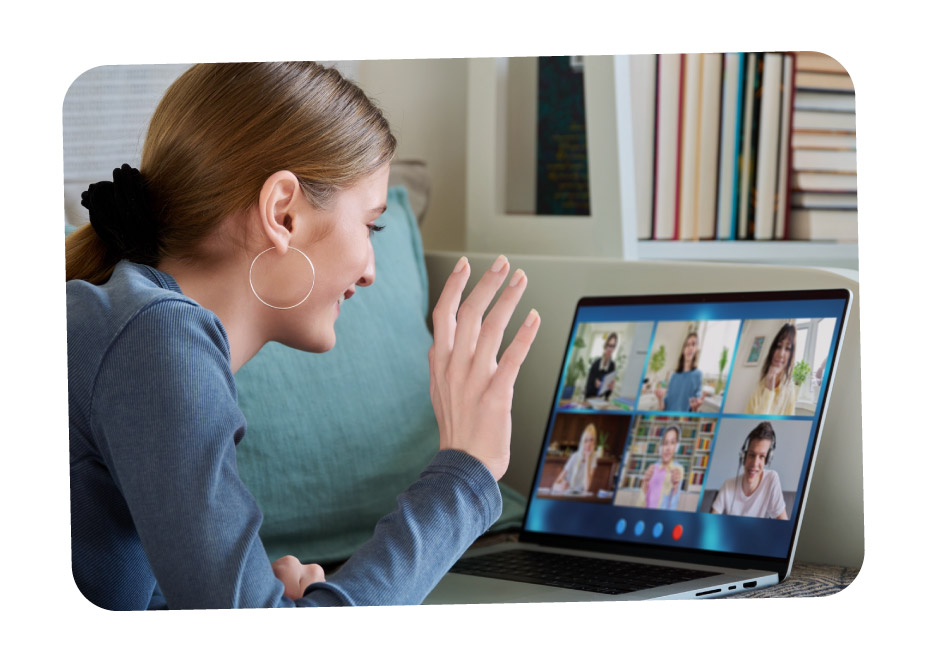
Aspiration is not inherently damaging for young people, though. In fact, it’s essential for building engaged students and citizens. We can’t ignore the good that these platforms do. The chance to reach out to other cultures and lifestyles so easily is incredible for our young people when harnessed properly. A complete ban on social media could restrict their worlds to immediate surroundings, destroying the opportunity to open minds. A return to the core purpose of social media needs to be made – allowing people to find commonalities in unexpected places.
user experience. In the fight against this new digital world we live in, I don’t think the proposed ban is the best weapon. We shouldn’t be at war with the platforms themselves, and with use so widespread, an all-guns-blazing approach could cause more harm than good. Cold turkey and millions of addicted teens – what could go wrong?
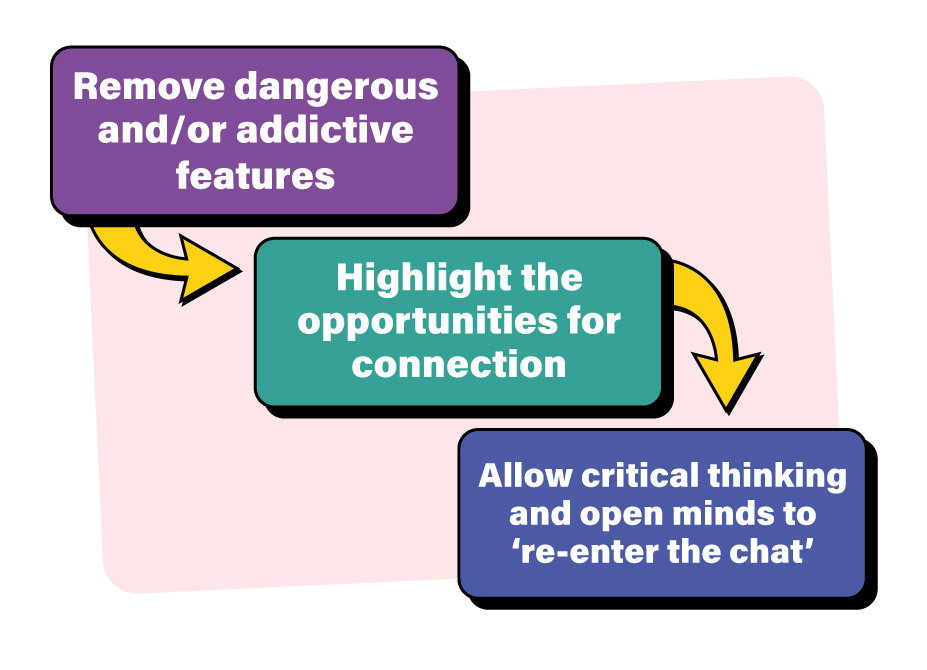
Instead of a blanket ban, we should be giving young people to tools to succeed on these platforms, providing them with the motivation and opportunity to change habits for the better. By removing extremist content, promoting methods for safe connection, and eliminating the chance to doomscroll into a rabbit hole of misogyny, racism, and unrealistic content, we break the barriers that are currently preventing effective use of social media; we stop allowing strings to be pulled and reintroduce active thought. Companies responsible for the addicting features should be held accountable to ensure that everyone, not just easily influenced teens, can regain control of their use.
The Theory
To combat the lack of opportunity and motivation, we can utilise a number of strategies, such as implementing legislation or guidelines. By scrapping addictive features, we allow young people to better use reflective motivation (the conscious decision-making processes like evaluating the past or making plans) and subsequently, begin to break the habit. Teens can access the positive features of social media platforms without the barriers of doomscrolling and extreme content, giving them the opportunity to build networks of like-minded people and allowing them to explore different areas of the internet without worry of exploitation.
At the End of the Day…
Ultimately, children need protecting from the addictive nature designed deliberately for social media sites, but punishing the target will never fully shield them from the dangers. If the systems creating them remain unchecked, the behaviour will simply reappear elsewhere, yet if we adapt these harmful platforms, they can be powerful tools for good that we can trust developing minds with. We could create a more understanding and analytical society with widespread respectful debate and sharing of ideas, allowing teenagers to reach out in a safer and more effective way. Let’s target companies, not kids.