Teenage vaccine hesitancy
A behaviour change project that explored the drivers of teenage vaccine hesitancy, helping develop more effective communications to build confidence and increase vaccine uptake.
More +

Vaccine hesitancy is often discussed as though people fall into two camps: those who support vaccines and those who oppose them. The reality is much more complex.
Across the UK, confidence in vaccination remains relatively high. The latest UKHSA parental attitudes survey found that 87% of parents agreed vaccines work for children, 85% agreed they are safe and 84% said they trusted them. Yet uptake tells a different story.
In England, MMR coverage remains below the level needed to reliably prevent measles outbreaks. The World Health Organization recommends 95% two-dose coverage to maintain measles elimination, but in 2024 to 2025 MMR2 coverage at age five was 83.7%. MMR1 coverage at 24 months was 88.9%.

Those percentages may not seem dramatically different from the target, but at population level they represent thousands of children without full protection. The consequences are already visible. England recorded 2,911 laboratory-confirmed measles cases in 2024, the highest annual total in decades, and cases have continued into 2026. So, if confidence remains high, why is uptake falling?
Behavioural science offers an important insight. Attitudes and behaviour do not always move together. People can believe vaccination is important and still fail to get vaccinated. The reasons are often practical rather than ideological. Appointments may be difficult to access. Parents may be juggling work and caring responsibilities. People may intend to book but forget, delay or struggle to find a convenient opportunity. Others may have unanswered questions or be uncertain about what is recommended and when. This helps explain why lower uptake is often concentrated in particular communities rather than spread evenly across the population.
UKHSA's National Immunisation Programme Health Equity Audit found that lower vaccination rates are associated with socioeconomic deprivation and are often lower among some ethnic minority groups. The gap is also widening. For MMR1 at age two, the difference between the least and most deprived areas increased from 1.0 percentage point in 2016 to 2017 to 7.6 percentage points in 2024 to 2025.
These patterns matter because they highlight that vaccination is not simply a matter of individual choice. People's ability to act is shaped by the circumstances around them. This is reflected in UKHSA's 5As framework: access, affordability, awareness, acceptance and activation. The framework encourages public health teams to look beyond knowledge deficits and understand what is actually preventing uptake.

Someone who is worried about vaccine safety needs a different response from someone who cannot attend appointments during working hours. Someone who struggles to navigate the healthcare system faces different barriers from someone who never receives a reminder. Treating all vaccine hesitancy as the same problem risks missing the real causes of low uptake. Behaviour is shaped by more than information alone. Trust, social norms, perceived risk and the ease of taking action all influence whether intentions become behaviour. Even small barriers can have a surprisingly large effect when people are busy, distracted or managing competing priorities. This has important implications for public health practice. Improving vaccine uptake is not simply a communications challenge. Providing accurate information remains essential, but information alone is unlikely to close the gaps revealed by current data.
The NHS vaccination strategy increasingly reflects this reality through convenient local delivery, targeted outreach and partnerships with trusted community organisations. These approaches recognise that making vaccination easier can be just as important as making the case for vaccination itself.
The current UK picture is therefore not one of widespread vaccine rejection. Confidence remains high, but uptake in several programmes is below target and inequalities continue to widen. For public health teams, the challenge is not simply to persuade people that vaccines are beneficial. It is to understand the practical, social and psychological barriers that prevent people from acting on intentions they may already hold. The more accurately those barriers are identified, the more likely it is that interventions will lead to meaningful improvements in uptake.
Improving vaccine uptake starts with understanding what is really getting in the way. At Social Change, we use behavioural science, audience insight and community engagement to help public health teams identify barriers, build trust and design interventions that make healthy behaviours easier to adopt.
A behaviour change project that explored the drivers of teenage vaccine hesitancy, helping develop more effective communications to build confidence and increase vaccine uptake.
More +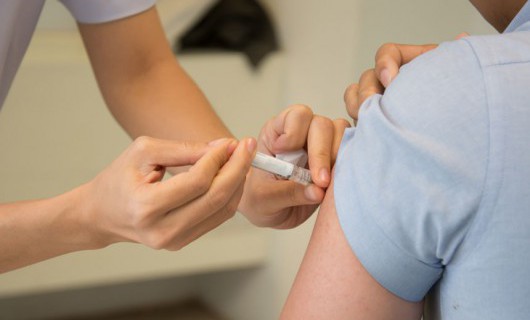
We've taken a look back on the news stories that caught our eye over the past couple of weeks, including Public Health England urging more to take-up the flu vaccine, record numbers of over-65's getting sexually transmitted infections and a 'sharp rise' in Xanax addition in children.
More +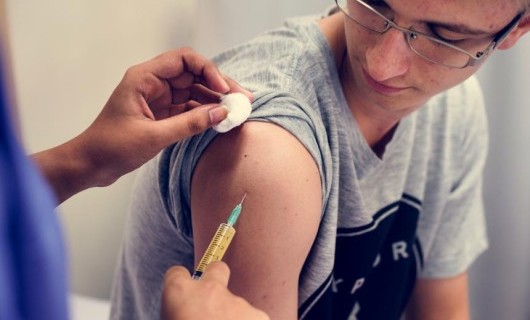
Co-produced vaccine education, using behavioural insights to help Public Health Wales motivate and engage young people in vaccination programmes.
More +By entering your email address, you agree to be added to our mailing list.
We respect your privacy.
We never sell data.
Unsubscribe anytime.